
What's inside
As an Amazon Associate I earn from qualifying purchases. This post may contain affiliate links at no extra cost to you.
How to choose a safe for beaches is not the same as how to choose a safe for a home. A beach safe needs to be portable enough to carry to the sand, light enough to fit in a beach bag, resistant to water, sand, and salt, and secure enough that it cannot be opened quickly or carried away easily. A home safe can be heavy, bolted to the floor, and left in one place, but a beach safe has to travel, and it has to work in wind, sun, and salt air.
Before you buy, check the law where you live. Firearm storage and carry laws vary by state and by country, and they change, so check current local law and, if in doubt, ask a licensed dealer or a lawyer before you take a firearm to a beach, or before you store one in a portable safe. Many beaches do not allow firearms, and many do not allow leaving a firearm unattended, even in a locked box. This guide is about portable safes for valuables, including a lawful firearm where it is allowed, and it assumes you are following local law, you are not leaving a firearm unattended, and you are using the safe safely, with the firearm unloaded for fitting, the magazine out, and the chamber checked.
The best overall portable safe in this guide is the Vaultek LifePod 2.0. It is a portable lock box with a biometric and keypad lock, a water-resistant seal, and a size that fits a handgun, a phone, and a wallet.
Our Top Picks
 Master Lock Portable Travel Safe9.8 x 5.5 x 2.6 inches5.5 x 9.53 x 2.25 inches1.6 poundsCheck on Amazon
How to Choose Safe for Beaches Compared
Use this table to compare portable safes, lock type, water resistance, and price at a glance. Water resistance is the gate for a beach safe: a safe should be splash and rain resistant, with a sealed lid, but it is not submersible, and it should not be left underwater. A safe that is waterproof in a lab test may still leak if it is dropped in sand or if its seal is dirty.
| Model | Key Specs | Best For |
|---|---|---|
| Vaultek LifePod 2.0 | Portable lock box, biometric and keypad, water-resistant seal, fits handgun and phone | Best overall safe for beaches |
| Fort Knox PB1 | Mechanical Simplex lock, no battery, steel body, fits handgun | Best mechanical safe for beaches |
| Vaultek VT20i | Biometric and keypad, steel body, fits handgun, flagged not beach-rated | Best Vaultek safe for beaches, flagged not beach-rated |
| Hornady RAPiD Safe 2700KP | Keypad, RFID, steel body, fits handgun, cable included | Best Hornady safe for beaches |
| SnapSafe Treklite Lock Box XL | Key lock, steel body, cable included, fits handgun and valuables | Best budget lock box for beaches |
| Master Lock 5900D Portable Safe | Combination lock, steel body, cable included, fits phone and wallet, flagged valuables only | Best portable safe for beaches for valuables only, flagged valuables only |
| SentrySafe P008E | Electronic lock, steel body, fits handgun, cable included | Best SentrySafe for beaches |
Master Lock Portable Travel Safe, Combination Lock Box with Cable, 5900D | Small Safe Box for Dorm, Beach & Gym, Portable Lockbox with Charging Port, Resettable Code, Protects Cash, Phones & Jewelry


As an Amazon Associate we earn from qualifying purchases. Product prices and availability are accurate as of the date/time indicated.
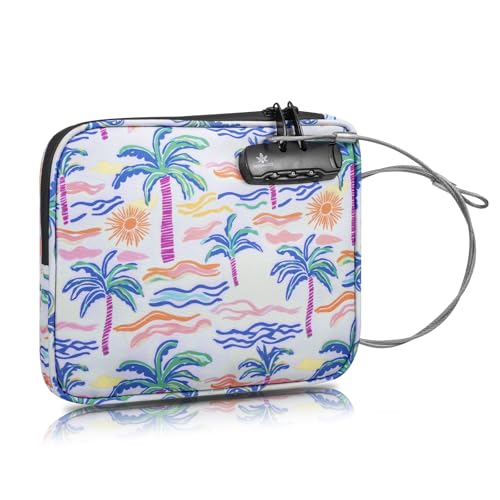
KOSMCCO Beach Locking Bag, Portable Safe, 9x7.5 Inch, Beach Day | Anti-Theft Design, Security Cable Included, Holds Phone Wallet and Keys, Ideal for Beach Pool Cruise and Travel
As an Amazon Associate we earn from qualifying purchases. Product prices and availability are accurate as of the date/time indicated.
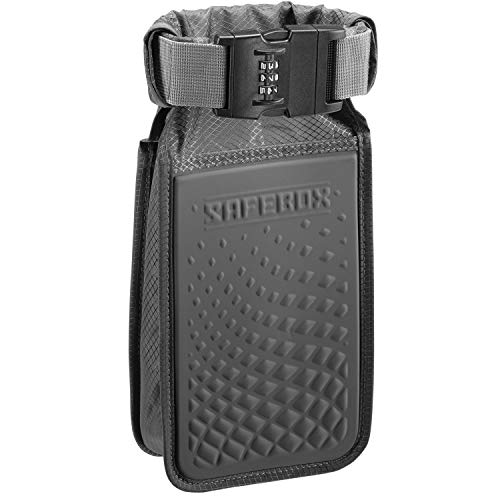
Lewis N. Clark Safebox Portable Safe with Anti Theft Combination Lock and Slash Resistant Material to Protect Wallet, iPhone and Valuables at the Beach, Pool, Camping + Hotel, Small
As an Amazon Associate we earn from qualifying purchases. Product prices and availability are accurate as of the date/time indicated.
Prices shown are approximate and for reference only. Prices change often, so please check the current price on Amazon before you buy.
How to Choose Safe for Beaches in 2026: 7-Step Guide
Step 1: Check Local Law — How to Choose Safe for Beaches That Is Legal
Step 1 is to check local law. How to choose a safe for beaches should start with local law, because firearm storage and carry laws vary by state and by country, and many beaches do not allow firearms, even in a locked box. Check current local law, check beach rules, and, if in doubt, ask a licensed dealer or a lawyer before you take a firearm to a beach, or before you store one in a portable safe.
A safe should be used with local law in mind, because a safe that is legal in one state may not be legal in another, and a safe that is legal at home may not be legal at a beach. Never leave a firearm unattended on a beach, even in a locked box, because a locked box is not a substitute for lawful carry and supervision, and a box that is left alone can be stolen. If you cannot carry lawfully at a beach, do not take a firearm to the beach.
Step 2: Check Size and Fit — How to Choose Safe for Beaches That Fits Your Gear
Step 2 is to check size and fit. How to choose a safe for beaches should check size, because a safe should fit the gear you need to keep secure, without being so large that it does not fit in a beach bag, and without being so small that it does not fit a handgun, a phone, and a wallet. The Vaultek LifePod 2.0 fits a handgun, a phone, and a wallet, while the Master Lock 5900D fits a phone and a wallet, but it is flagged as valuables only, because it is not made for a firearm.
A safe should be used with a size that fits your gear, because a safe that is too small will not close properly, and a safe that is too large will be heavy and hard to carry. Measure your handgun, your phone, and your wallet, and check the safe’s interior dimensions before you buy. A safe that fits a handgun should have enough room for the gun, without forcing it in, and without leaving space for it to move.
Step 3: Check Lock Type — How to Choose Safe for Beaches That Opens When You Need It
Step 3 is to check lock type. How to choose a safe for beaches should check lock type, because a biometric lock, a keypad lock, a mechanical lock, and a key lock all work differently in sand, salt, and water. A biometric lock, such as the Vaultek LifePod 2.0, opens with a fingerprint, but it can fail if your finger is wet, sandy, or salty, so register at least two fingerprints, at multiple angles, and test the lock in the dark, and with wet hands, before you rely on it at a beach.
A keypad lock, such as the Hornady RAPiD Safe, opens with a code, and it works in sand and water better than a biometric lock, but it needs a battery, and it can fail if the battery dies. A mechanical lock, such as the Fort Knox PB1 with a Simplex lock, needs no battery, and it works in sand, salt, and water, because it has no electronics to fail. A key lock, such as the SnapSafe Treklite, is simple and reliable, but it needs a key, and a key can be lost at a beach. Choose a lock type that fits your hands, your beach, and your backup plan, and always have a backup key or code.
Step 4: Check Water and Sand Resistance — How to Choose Safe for Beaches That Keeps Gear Dry
Step 4 is to check water and sand resistance. How to choose a safe for beaches should check water resistance, because a beach safe should be splash and rain resistant, with a sealed lid, but it is not submersible, and it should not be left underwater. A safe that is waterproof in a lab test may still leak if it is dropped in sand, or if its seal is dirty, so test it before your trip by filling it with tissue paper, sealing it, and submerging it briefly in water, then checking if the tissue is dry.
A safe should be used with a seal that is clean, because a seal that is dirty with sand will not seal properly, and a safe should be used with a lid that is closed properly, because a lid that is not closed will let water and sand in. Clean the seal after every beach trip, with a dry cloth, and check it for sand, salt, and wear. A safe that is stored wet can grow mould in 24 to 48 hours, and a safe that is stored in high humidity can rust, so dry it completely after use.
Step 5: Check Cable and Security — How to Choose Safe for Beaches That Cannot Be Carried Away
Step 5 is to check cable and security. How to choose a safe for beaches should check cable, because a portable safe should have a cable that lets you secure it to a fixed object, such as a beach chair, a car seat, or a heavy bag, so it cannot be carried away easily. The Hornady RAPiD Safe, SnapSafe Treklite, and Master Lock 5900D all include a cable, while the Vaultek LifePod 2.0 and Fort Knox PB1 can be secured with a cable or with bolts.
A safe should be secured with a cable or with bolts, because a safe that is not secured can be picked up and carried away, even if it is locked. Secure it with bolts or a cable, and check the cable every time you use it, because a cable that is frayed or cut will not protect your gear. Never leave a safe unattended on a beach, even if it is locked and cabled, because a locked box is not a substitute for supervision, and a box that is left alone can be stolen.
Step 6: Test Before Your Trip — How to Choose Safe for Beaches That Works When You Need It
Step 6 is to test before your trip. How to choose a safe for beaches should test the lock, the seal, and the fit before your trip, with the firearm unloaded, the magazine out, and the chamber checked, and with your phone and wallet inside, to make sure everything fits and the lock opens quickly. Register at least two fingerprints, at multiple angles, if you use a biometric lock, and test it in the dark, and with wet hands, because a fingerprint that works at home may not work at a beach.
A safe should be tested with tissue paper for water resistance, with a cable for security, and with your gear for fit, before your trip, because a safe that is not tested will fail when you need it most. Test the safe for at least 30 minutes, with your gear inside, and practice opening it quickly, with your eyes closed, so you can open it in the dark or in an emergency.
Step 7: Clean and Store After Your Trip — How to Choose Safe for Beaches That Lasts
Step 7 is to clean and store after your trip. How to choose a safe for beaches should clean after every beach trip, with a dry cloth, to remove sand, salt, and water, because sand and salt can damage a lock, a seal, and a firearm. Clean the safe with mild soap only, dry it completely, and store it in a cool, dry place, with a temperature of 60 to 70 degrees Fahrenheit and a humidity of 30 to 50 percent, because a safe that is stored wet can grow mould in 24 to 48 hours, and a safe that is stored in high humidity can rust.
A safe should be stored with the firearm unloaded, the magazine out, and the chamber checked, and with ammunition stored separately, per local law, because a firearm that is stored loaded is not safe, and a firearm that is stored with ammunition is not safe. Check the safe every few months, even if you have not used it, because a safe that is not checked can rust, and a lock that is not tested can fail.
How to Choose Safe for Beaches Buying Guide
Choosing a safe for beaches is not just about picking the cheapest safe. It is about matching size, lock, water resistance, cable, and use to the beach, the gear, and the law, while keeping safety first.
Biometric and Keypad vs Mechanical: Choosing a Safe for Beaches That Opens Reliably
Biometric and keypad versus mechanical is the first filter. A biometric lock, such as the Vaultek LifePod 2.0, opens with a fingerprint, which is fast, but it can fail if your finger is wet, sandy, or salty, so register at least two fingerprints, at multiple angles, and test it in the dark, and with wet hands. A keypad lock, such as the Vaultek VT20i or Hornady RAPiD Safe, opens with a code, which works in sand and water better than a biometric lock, but it needs a battery, and it can fail if the battery dies. A mechanical lock, such as the Fort Knox PB1 with a Simplex lock, needs no battery, and it works in sand, salt, and water, because it has no electronics to fail.
For a beach, a mechanical lock or a keypad lock with a backup key is often more reliable than a biometric lock alone, because sand, salt, and water can affect a fingerprint sensor. The Vaultek VT20i is flagged as not beach-rated, because it is made for a nightstand, not for a beach, and it does not have a water-resistant seal like the LifePod 2.0. Choose a lock type that works with wet, sandy hands, and always have a backup key or code.
Water Resistance, Sand, and Salt: Choosing a Safe for Beaches That Survives the Beach
Water resistance, sand, and salt are the second filter. A beach safe should be splash and rain resistant, with a sealed lid, but it is not submersible, and it should not be left underwater. A safe that is waterproof in a lab test may still leak if its seal is dirty with sand, so clean the seal after every beach trip, with a dry cloth, and check it for wear. Salt air can cause rust, so dry the safe completely after use, and store it in a cool, dry place, with a humidity of 30 to 50 percent.
Sand is the biggest risk for a beach safe, because sand can get into a lock, a seal, or a hinge, and it can prevent the safe from opening or closing properly. Keep the safe in a bag, not directly on the sand, and do not open it on a windy beach where sand can blow in. Test the safe with tissue paper before your trip, by filling it with tissue, sealing it, and submerging it briefly in water, then checking if the tissue is dry.
Cable, Size, and Law: Choosing a Safe for Beaches That Is Secure and Legal
Cable, size, and law are the third filter. A portable safe should have a cable that lets you secure it to a fixed object, so it cannot be carried away easily, and it should be secured with bolts or a cable, and checked every time you use it. Size matters too: a safe should fit your gear, without being so large that it does not fit in a beach bag, and without being so small that it does not fit a handgun, a phone, and a wallet.
Law matters most: check local law before you take a firearm to a beach, because many beaches do not allow firearms, and many do not allow leaving a firearm unattended, even in a locked box. Store a firearm per local law, with the firearm unloaded, the magazine out, and the chamber checked, and with ammunition stored separately, per local law. Never leave a firearm unattended on a beach, even in a locked box, because a locked box is not a substitute for lawful carry and supervision.
How to Choose Safe for Beaches FAQ
What is the best safe for beaches?
Can I leave a firearm in a safe on a beach?
No, you should not leave a firearm unattended on a beach, even in a locked box, because a locked box is not a substitute for lawful carry and supervision, and a box that is left alone can be stolen. Many beaches do not allow firearms, and many do not allow leaving a firearm unattended, even in a locked box, so check local law before you take a firearm to a beach. If you cannot carry lawfully at a beach, do not take a firearm to the beach. Store a firearm per local law, with the firearm unloaded, the magazine out, and the chamber checked, and with ammunition stored separately.
Is a beach safe waterproof?
For a beach safe, a water-resistant seal means it is splash and rain resistant, but it is not submersible, and it should not be left underwater. A safe that is waterproof in a lab test may still leak if its seal is dirty with sand, so test it before your trip by filling it with tissue paper, sealing it, and submerging it briefly in water, then checking if the tissue is dry. Clean the seal after every beach trip, with a dry cloth, and dry the safe completely after use, because a safe that is stored wet can grow mould in 24 to 48 hours.
How do I secure a portable safe at a beach?
For a portable safe at a beach, secure it with a cable to a fixed object, such as a beach chair, a car seat, or a heavy bag, so it cannot be carried away easily, and check the cable every time you use it, because a cable that is frayed or cut will not protect your gear. Secure it with bolts or a cable, and never leave it unattended, even if it is locked and cabled, because a locked box is not a substitute for supervision. Keep the safe in a bag, not directly on the sand, and do not open it on a windy beach where sand can blow in.
FAQ
Can I leave a firearm in a safe on a beach?
Is a beach safe waterproof?
How do I secure a portable safe at a beach?
Related guides
- How to Store Cases Between Seasons in 2026: How to Store Cases Between Seasons for Safe Firearms, Dry Cases, and Simple Seasonal Storage
- What to Avoid No Name Lockboxes in 2026: How to Spot Weak Lockboxes and Choose a Safe One
- Best Holster for Taurus G2S in 2026: Best Holster for Taurus G2S for Safe Carry, Correct Fit, and Simple Everyday Use
- Best Chamber Flag Set for Safety in 2026: 7 Chamber Flag Sets That Offer Clear Visibility, Secure Fit, and Reliable Performance for Safe Firearm Handling
More from Amazon
Programs that pair well with the guide above. Offers and eligibility are set by Amazon and may change.
Free shipping on eligible items, Prime Video and more. Eligible new members can start with a free trial.
Start a Prime free trialAudiobooks and podcasts to listen to on the go. Eligible new members can start with a free trial.
Try Audible freeAd-free music streaming. Eligible new subscribers can start with a free trial.
Try Music Unlimited freeA free business account with business pricing and bulk-buying tools for work, shop or home office.
Create a business accountAs an Amazon Associate we earn from qualifying purchases.

Write Your Review
No reviews yet. Be the first to share your experience!