
What's inside
- Best Case for City Airline Travel: Lock Points, Foam, and the Rules That Outrank Them Both
- Quick Comparison: Airline Handgun Cases for City Travel Compared
- The Six City Citizens Reviewed
- Buying Guide: The Procedure, the Case, and the Trip, in That Order
- How We Selected These Airline Travel Cases
- Frequently Asked Questions About Flying With a Firearm Case
As an Amazon Associate I earn from qualifying purchases. This post may contain affiliate links at no extra cost to you.
Choosing the best case for city airline travel is a purchase governed by rules before it is governed by preferences, because a firearm flown as checked baggage travels under a legal procedure, and the case is that procedure’s central object. The framework, which this guide states in general terms and which every traveller must verify in its current detail before flying, is this: in the United States, firearms may be transported in checked baggage only, never in the cabin, unloaded, declared to the airline at check-in, and secured in a locked, hard-sided case; ammunition is subject to its own packaging rules and quantity limits that vary by airline; and the traveller is bound simultaneously by federal transport rules, the airline’s own contract conditions, and the laws of the departure, connection, and destination jurisdictions, which for the city traveller of this article’s title is the sharpest point of all, since a case that is perfectly lawful at home can carry its owner into a jurisdiction, New York and New Jersey being the standard cautions, where the firearm itself, its magazines, or its mere possession without local licensing is unlawful. A case cannot solve a legal problem, and this guide’s first buying advice is jurisdictional rather than commercial: confirm that the trip itself is lawful at every point the bags will touch, verify the firearm is unloaded with the chamber inspected before the case is ever closed, and then choose the case that performs the procedure flawlessly.
Within that frame, the case’s job description is exact and auditable. It must be hard-sided and lockable in a manner that genuinely secures it, the standard the regulators express as a case that cannot be easily pried or flexed open and locks that keep it closed, which in practice means a rigid polymer shell, reinforced lock points, and padlocks of real substance, with the traveller, and only the traveller, retaining the keys or combination, which is why TSA-recognised luggage locks are not the correct locks for a firearm case and standard padlocks are. It must protect the firearm against the baggage system’s honest violence, drops, crushes, and conveyors, with foam that holds the pistol in place rather than allowing it to migrate and batter itself. And for the city traveller it must do all this at a size and discretion suited to an urban journey: compact enough to ride inside a larger checked suitcase where the airline’s procedure allows the traveller to prefer that arrangement, unremarkable in appearance, and manageable through the apartment elevator, the taxi, and the airport queue by one person carrying everything they own for the trip. This guide compares the real, currently sold hard cases that meet the procedure’s standard and builds its buying guide around the journey from the front door to the check-in counter and, lawfully, at the destination beyond it.
Our Top Picks
Best Case for City Airline Travel: Lock Points, Foam, and the Rules That Outrank Them Both
The Locking Standard: Two Locks, Real Hasps, and Keys That Stay With the Owner
A firearm case is a locked container in law, not merely a box with a latch, and its locking architecture is the first specification to audit. The case should provide reinforced lock holes, ideally two, sized for proper padlocks whose shackles fill them without slop, since a lock through an oversized, thin, or flexible hasp is theatre rather than security. Two locks are the correct pattern even where a case offers a single lock point’s minimum, because a case pried at an unlocked corner can flex alarmingly in the thin designs, and because redundancy answers the lock that fails or the key that is lost at the worst address in the itinerary. The locks themselves should be solid padlocks, keyed or combination by the owner’s preference for a key they cannot forget against a combination they cannot lose, and, as the procedure requires, their keys or combination remain with the traveller alone; if an inspection is required, the traveller is contacted to open the case rather than surrendering the key, which is the reason the check-in ritual includes remaining available near the counter until the bag is cleared. Latches matter as the lock’s colleagues: the case should close with positive, preferably two-stage latches that cannot pop under a drop or a conveyor’s persuasion, and its shell and hinge should resist the pry-and-flex test the traveller can perform in the shop with their hands, because a case that can be peeled open far enough to reach inside while locked fails the standard’s plain meaning whatever its marketing says. Integrated combination locks built into some cases’ latches are a convenience this guide treats cautiously: where they genuinely lock the case to the same standard they may serve, and where they are a light luggage mechanism wearing a lock’s costume the padlock points should be used instead or as well.
Size and Discretion: The City Traveller’s Two Extra Specifications
The duty traveller flying to a range can check a long, obvious rifle case and think no more about it; the city traveller’s arithmetic is different, and this article’s keyword exists because of it. A handgun case for the urban journey should be the smallest case that holds the pistol, its magazines as the rules provide, and the foam’s protection without crushing, since every extra litre is carried through more lobbies, lifts, and pavements than an airport diagram suggests. Many city travellers prefer the case-within-a-case arrangement, the locked hard pistol case placed inside an ordinary checked suitcase among the clothing, which is discreet at every stage, keeps the journey’s luggage to one bag, and is a pattern the airlines’ procedures generally contemplate, provided the declaration at check-in is made exactly as required and the firearm case itself meets the locked, hard-sided standard on its own merits, which it must, since the suitcase around it contributes nothing to compliance. Appearance is a legitimate specification in this parish and should be chosen without embarrassment: a plain black or grey case that reads as camera equipment or tools is the city traveller’s correct aesthetic, and the tactical exterior, the stickered lid, and the firearm-brand billboard are, at a city hotel’s front desk and a shared apartment landing, disadvantages purchased at full price. Weight completes the urban audit, since the traveller is their own porter: the protective classes in this table span a modest range, and the city buyer should feel the case loaded, with locks, as it will actually be carried, up the actual stairs.
Foam and Interior: Protection Is a Fitting, Not a Filling
The interior’s job is to hold the unloaded firearm immobile against the baggage system’s drops, and foam is how it is done, in two schools the buyer should distinguish. Pluckable foam, pre-scored in cubes, lets the owner tear out a pistol-shaped cavity without tools and is the standard fitting of most cases in this table; done carefully, with the outline traced and the cubes removed in a clean wall, it cradles the firearm properly, and done hastily it leaves a loose pit in which the pistol travels and chafes. Solid foam, cut by the owner with a blade or ordered custom-cut for the exact firearm in the premium services, gives the firmest and most durable fitting at the cost of effort and permanence. Either school should hold the pistol with its surfaces supported, the slide and frame neither crushed by an over-tight lid nor free to shift, with magazines and any included accessories in their own cutouts rather than loose against the firearm’s finish, and with ammunition never loose in the case and transported only as the airline’s ammunition rules provide, in its proper packaging, which many travellers keep in a separate, dedicated container in the checked bag for clarity at inspection. A desiccant pack in the case is the travelling shooter’s small wisdom for a journey between climates, and the case’s pressure equalisation valve, present across the premium rows, deserves its sentence: cabin and hold pressure changes can vacuum-lock a sealed case shut at the destination or stress its seals, and the valve equalises quietly in a way the traveller will appreciate the first time a lesser case must be pried open on a hotel bed.
Quick Comparison: Airline Handgun Cases for City Travel Compared
| Travel Case | Size / Best For | Key Specs |
|---|---|---|
| Pelican 1170 class | Compact single pistol — best case for city airline travel overall | Shell, lock point, and foam classes as published, valve in class, interior dimensions in range |
| Pelican Vault V100 class | Compact single pistol — best value protection | Shell, latch, and foam classes as published, lock points in class |
| Nanuk 910 class | Compact single pistol — best latches and finish | Shell, latch, and foam classes as published, lock points and valve in class |
| SKB iSeries 0907 class | Compact waterproof — best weather sealing | Shell, gasket, and foam classes as published, lock points in class |
| Condition 1 179 class | Compact budget — best lowest price | Shell, foam, and lock classes as published, sizes in range |
| Pelican 1200 class | Compact deep — best for pistol plus accessories | Shell, lock point, and foam classes as published, deeper interior in class |
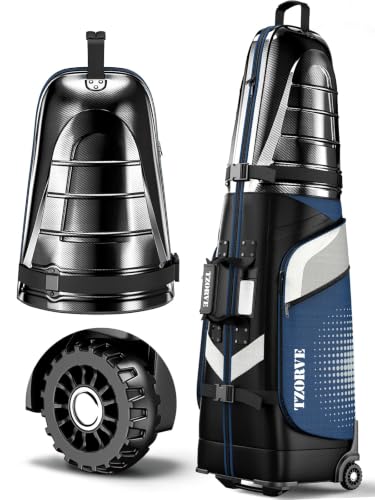
Golf Travel Bags for Airlines with Carbon Fiber Hard Top, Padded Golf Travel Case with Oversize Tank Wheels, 1680D Waterproof Oxford Protect Golf Clubs Bag, 2 Corner Guards 4 Pockets for Men Women


As an Amazon Associate we earn from qualifying purchases. Product prices and availability are accurate as of the date/time indicated.

Samsonite Travel Tech Case - Small Size Travel Case for Headphones, Chargers, Mouse, Stylus - Black
As an Amazon Associate we earn from qualifying purchases. Product prices and availability are accurate as of the date/time indicated.
Prices shown are approximate and for reference only. Prices change often, so please check the current price on Amazon before you buy.
Rules summaries are general information, not legal advice; verify current TSA, airline, and jurisdictional requirements before every trip.
The Six City Citizens Reviewed
1. Pelican 1170 — Best Overall
The 1170 is the city journey’s reference case because its dimensions are a slimline pistol’s portrait: compact enough to disappear into a checked suitcase, built with the shell, seal, lock points, and pressure valve of Pelican’s professional line, and fitted with pluck foam that shapes to the pistol in an evening. Its latches close with the authority the check-in counter inspires one to want, and its plain exterior is the discretion this guide prescribes. For the traveller flying with one handgun from a city home, it is the first recommendation, and its owner’s remaining tasks are the locks, the declaration, and the law, which is exactly where a case should leave its owner: with nothing about the equipment left to worry about.
2. Pelican Vault V100 — Best Value Protection
The Vault line is Pelican’s engineering at a traveller’s price, and the V100 brings the pattern to the single-pistol size with a robust shell, positive latches, proper lock points, and pluck foam, in a case a little less refined in finish than the flagship row and entirely its equal in the duties that matter at a baggage belt. For the city traveller provisioning the whole procedure, locks, a second case for a companion, the airline’s fees, the Vault’s saving is real money correctly kept. It is the row this guide recommends to the buyer who asks, reasonably, what the extra money above it buys, since the answer, finish and a name’s long record, may or may not be worth it to them.
3. Nanuk 910 — Best Latches and Finish
Nanuk’s 910 competes on the mechanisms: its two-stage latches are the finest in this table to operate, closing with a certainty that gloved and hurried hands appreciate, over a shell and seal of the premium class, with lock points and a valve as the standard requires. Its interior suits the single pistol and its essentials, and its finish, colours included for the traveller who wants their case findable on a belt, is a grade above the field. The city buyer choosing on discretion will take it in black and lose nothing of its engineering. A connoisseur’s case that happens also to be a traveller’s.
4. SKB iSeries — Best Weather Sealing
SKB’s iSeries cases are built around a gasketed, waterproof brief, and the compact member of the line suits the traveller whose journeys include weather at both ends, the open trolley in the rain, the destination’s wet pavement, and the general humidity of baggage holds in summer. Its shell, lock points, and foam meet the procedure’s standard in the line’s established manner, and its latching and handle are working-grade rather than refined. For the traveller whose case will also serve at the destination, carried to ranges and properties in all weathers, the seal is a legitimate first specification and this is its row.
5. Pelican 1200 — Best for Pistol Plus Accessories
The 1200 is the classic compact case in a deeper mould, and that depth is its parish: the pistol travelling with more of its household, the holster that must fly with it, the extra magazines as the rules provide, the tools and the light, in one fitted interior rather than distributed through the suitcase. It remains small enough for the case-within-a-case pattern in a full-size checked bag and carries the flagship line’s shell, valve, and lock points. The city traveller whose pistol does not travel light, or whose destination stay is long, will find the standard compact cases a squeeze and this row the correct size wearing a familiar name.
6. Condition 1 — Best Lowest Price
Condition 1’s compact cases are the budget entry to a compliant pattern: a rigid shell, pluck foam, and lock provisions at the table’s friendliest prices, from a maker whose cases have accumulated a real record among travelling shooters. The shell’s stiffness and the latches’ authority sit a class below the premium rows, and the buyer should perform this guide’s pry-and-flex audit with particular care and lock both points with substantial padlocks, which the design contemplates. For the occasional flyer whose alternative is not flying at all, it is a defensible purchase honestly graded; for the regular city traveller, the rows above repay their difference in the currency of certainty at counters.
Buying Guide: The Procedure, the Case, and the Trip, in That Order
Step One: Verify the Trip Is Lawful Before Choosing Anything
Begin with the itinerary, not the catalogue. Confirm the firearm’s lawful possession at the destination and at every connection where the traveller will take possession of the bag, with particular care for jurisdictions whose licensing, magazine, or firearm-type laws differ from home, since an involuntary overnight or a rebooking can put a traveller in possession in a place they never intended to visit, a contingency the prudent plan for by routing and, where the law is hostile, by not making the trip with a firearm at all. Read the airline’s current firearm and ammunition conditions in full, its declaration procedure, its ammunition packaging and quantity rules, and any case requirements it states, and read the transport regulator’s current guidance alongside it, because the procedure is amended from time to time and memory is not a source. Confirm the destination’s storage and transport laws for the stay itself, the hotel, the vehicle, and the premises visited, and arrange the lawful storage at the far end, since the case that flew the pistol so well becomes, at the destination, a storage device subject to that place’s rules and to this site’s standing doctrine: stored unloaded, locked, and inaccessible to anyone unauthorised, with ammunition stored separately as law and prudence direct.
Step Two: Buy the Case to the Standard and Fit It at Home
Choose from the table by size and sealing, then audit the individual case as the standard requires: shell rigid, corners and hinge sound, latches positive, lock points reinforced and sized to real padlocks, foam present and sufficient. Buy the locks in the same order, two substantial padlocks, keyed alike for the owner’s sanity or in a combination pattern they cannot forget, and keep their keys on the owner’s person through the journey. Fit the foam at home with the unloaded, verified firearm, magazine removed and chamber inspected, in the calm of a table rather than the morning of the flight, tracing the outline, shaping the cavity, and checking the lid’s close for the supported, uncrushed fit this guide describes, with accessories in their own cutouts and nothing loose. Close the case, lock it, and perform the audit: the latches hold, the locks hold, the shell does not flex to a reaching gap at any corner. Pack a desiccant, label the case’s interior with the owner’s contact details where the airline’s process makes that useful, and photograph the packed case and the firearm’s serial record for the owner’s files, stored securely, against the small catastrophes of travel.
Step Three: Fly the Procedure Calmly and Arrive Lawfully
At the airport, the routine is the reward for all the above. Arrive with the time the procedure deserves, firearm unloaded and case locked before entering the terminal as the rules and the airline direct, and declare the firearm at the check-in counter in the airline’s own words and process, completing any declaration card exactly as instructed and placing it as directed. Remain available in the check-in area until the bag is cleared for screening, in case the case must be opened in the traveller’s presence, and never surrender the key or combination for an opening in your absence, since the procedure’s design, and the traveller’s right, is to be present or to be the one who opens it. At the destination, collect the bag promptly, noting that firearm bags may be delivered to the airline’s baggage office rather than the belt in some procedures, verify the case’s locks and seals before leaving the airport, and proceed under the destination’s transport laws to the lawful storage arranged in step one. Debrief the trip into the case’s own readiness: foam inspected, locks oiled as their maker directs, desiccant renewed, and the whole system stored, firearm unloaded and locked away under the home rules, ready for the next lawful journey.
How We Selected These Airline Travel Cases
We included only real, named, currently sold hard-sided pistol cases whose makers publish interior dimensions, shell, latch, and lock point specifications, sized for single-handgun airline travel. Ratings weight locking architecture, shell rigidity, size and discretion for urban travel, and value. This article is general information about equipment and procedure, not legal advice.
Frequently Asked Questions About Flying With a Firearm Case
Can I use TSA locks on a firearm case?
No, not as the case’s securing locks, and the reasoning is the procedure’s own: the firearm case must be locked such that the traveller alone retains access, with the keys or combination in the traveller’s keeping, so that if an inspection is needed the traveller opens the case in the screening process rather than the case being openable by a master key held by others. TSA-recognised luggage locks are designed to be opened by the screening authority’s master keys, which is precisely the access pattern the firearm rule excludes. Use substantial ordinary padlocks, as this guide’s locking section directs, keep the keys on your person, and remain available near check-in until the bag clears, which is the traveller’s half of the arrangement. The outer suitcase in a case-within-a-case pattern is a separate question governed by ordinary baggage practice, and the airline’s current guidance should be followed for it; the firearm case inside it must meet the standard on its own, with its own proper locks, regardless of what closes the suitcase.
How should ammunition be packed when flying?
By the airline’s current published rules, which the traveller must read for their specific carrier before every trip, since quantities, packaging, and placement requirements are the airline’s to set within the regulator’s framework and they differ between carriers. The general pattern across the industry is that ammunition must be packaged in a container designed for it, the manufacturer’s box or a dedicated ammunition box that protects and separates the cartridges, never loose, with quantity limits commonly expressed by weight, and with placement in checked baggage only, in some carriers’ rules permitted within the firearm case in its proper packaging and in others required separately, which is exactly the sort of detail that must come from the airline’s current text rather than from memory or from a guide. Magazines are subject to their own conditions in some jurisdictions and some airlines’ rules, loaded magazines being broadly disfavoured or prohibited in favour of empty magazines and boxed ammunition. When any element is in doubt, the airline’s firearms desk, contacted before the travel day, is the authority, and the traveller who arrives having followed the written rule travels calmly.
What happens if my connection or destination has stricter gun laws?
Potentially, serious legal consequences, which is why this guide places jurisdiction before equipment. A traveller is subject to the law where they possess the firearm, and a checked bag reclaimed during an involuntary overnight, a missed connection, or a diversion can place the traveller in possession in a jurisdiction where the firearm, its magazines, or its possession without a local licence is an offence, a trap that has caught travellers whose journeys were lawful at both ends. The defences are planning rather than argument: route through and to jurisdictions where the whole journey is lawful, understand that a through-checked bag on a smooth connection is a different exposure from a bag reclaimed overnight, and decline itineraries whose risk cannot be made lawful, since no case, lock, or declaration cures a possession offence. Federal law provides a safe-passage protection for certain through travel with an unloaded, locked, inaccessible firearm, and its scope and conditions are a matter for the traveller’s own legal research or counsel rather than for reliance on a summary, particularly where a stop involves taking possession. This article is equipment guidance, and the traveller with any doubt about an itinerary should resolve it with the authorities or a lawyer before the ticket, not at the airport.
Can I put the locked pistol case inside my checked suitcase?
Generally yes, as a pattern, provided every element of the procedure is still performed in full: the firearm unloaded and verified, the pistol case itself hard-sided, locked to the standard with the traveller’s own padlocks, and the firearm declared to the airline at check-in exactly as its process requires, since the suitcase’s presence changes the arrangement’s discretion, not its obligations. The airline’s current conditions govern and should be confirmed, as with all of this procedure, and the traveller should be prepared for the bag to be handled by whatever delivery process the destination applies to declared firearm baggage, which may be the baggage office rather than the belt. The arrangement’s virtues for the city traveller are real, one bag through the urban journey, no advertisement of its contents at any stage, the case protected by the suitcase’s clothing against the belt’s abrasion. Its cautions are equally real: the suitcase must still be a checked bag of the airline’s ordinary rules, the locks on the inner case must be the procedure’s locks rather than the suitcase’s, and the whole system must remain a locked, hard-sided case in law even though it travels in soft company, which the cases in this table, chosen and locked as this guide directs, are designed to be.
Related guides
- How to Store Cases Between Seasons in 2026: How to Store Cases Between Seasons for Safe Firearms, Dry Cases, and Simple Seasonal Storage
- What to Avoid No Name Lockboxes in 2026: How to Spot Weak Lockboxes and Choose a Safe One
- Best Holster for Taurus G2S in 2026: Best Holster for Taurus G2S for Safe Carry, Correct Fit, and Simple Everyday Use
- Best Chamber Flag Set for Safety in 2026: 7 Chamber Flag Sets That Offer Clear Visibility, Secure Fit, and Reliable Performance for Safe Firearm Handling
More from Amazon
Programs that pair well with the guide above. Offers and eligibility are set by Amazon and may change.
Free shipping on eligible items, Prime Video and more. Eligible new members can start with a free trial.
Start a Prime free trialAudiobooks and podcasts to listen to on the go. Eligible new members can start with a free trial.
Try Audible freeAd-free music streaming. Eligible new subscribers can start with a free trial.
Try Music Unlimited freeA free business account with business pricing and bulk-buying tools for work, shop or home office.
Create a business accountAs an Amazon Associate we earn from qualifying purchases.

Write Your Review
No reviews yet. Be the first to share your experience!