
What's inside
- Best Holster for Sig P320 XTen Comp: Exact Fit Is a Safety Specification
- Quick Comparison: Best Holster for Sig P320 XTen Comp Makers and Patterns
- Detailed Reviews: Best Holster for Sig P320 XTen Comp Picks
- Buying Guide: How to Choose the Best Holster for Sig P320 XTen Comp
- Frequently Asked Questions About Best Holster for Sig P320 XTen Comp
As an Amazon Associate I earn from qualifying purchases. This post may contain affiliate links at no extra cost to you.
The SIG Sauer P320 XTen Comp is not a pistol that tolerates an approximate holster, and its name is the reason. It is a full-size 10mm in SIG’s stated pattern, with an integrated compensator that lengthens and reshapes its slide’s front end, a flat trigger, an optics-ready slide in its maker’s design, and the mass and recoil of the cartridge it chambers. A holster moulded for a standard P320, or for the plain XTen without the comp, may swallow this pistol’s front end badly, bind on the compensator’s ports and profile, cover its trigger guard incompletely, or retain it by friction in a place the maker never designed, and every one of those is a safety specification failing, not a fitment opinion. The best holster for Sig P320 XTen Comp is therefore bought by an exactness discipline before it is bought by brand: the maker’s fit list must name this pistol, in this compensated configuration, with the owner’s exact light and optic where they are carried, confirmed in the maker’s own documents or by the maker’s own answer, because a holster is a safety device whose whole profession is to cover a trigger guard completely, retain a loaded firearm through a fall and a struggle’s physics, and release it only to a trained, deliberate draw. This guide compares the makers whose patterns serve this pistol, inside this site’s standing frame for all carry: carry is lawful where its owner carries, under the permit or authority their jurisdiction requires and in the places that authority reaches; skills are built dry, with a verified unloaded firearm and no ammunition in the room, under instruction where it can be had; and at home the pistol lives in locked storage, unloaded in the household’s standing pattern, with ammunition locked separately, a holster being transport between two states of security and never a substitute for either.
The XTen Comp’s size writes its own carry geography, and an honest guide draws the map before selling the ticket. This is a big pistol, and its realistic carry lives in three places: outside the waistband under a real cover garment, in the cold months and the open country where its owner lawfully carries it as a field and bear-country instrument, which is the role its cartridge and its compensator were designed around in its maker’s positioning; on the chest, in the GunfightersINC pattern that leads this table, where a pack’s hip belt and a wader’s bib and a vehicle’s seatbelt all stop being arguments; and, for the determined and the large-framed, inside the waistband in a dedicated rig in the Tier 1 pattern, an undertaking this guide respects and prices honestly, in concealment effort, in wardrobe, and in the training hours a draw from that mass requires to be a safe skill rather than a hope. Appendix carry of a compensated full-size 10mm is a specialist’s choice, and this article will not pretend otherwise to sell a row. What every geography shares is the non-negotiables: a rigid shell, Kydex or its peers in the makers’ patterns in this table, moulded to this pistol; a trigger guard covered to its whole perimeter with no gap a strap, a shirt, or a drawstring can enter; retention stated by its maker and proven by the owner’s own unloaded tests; and hardware, clips, wings, and fasteners, torqued and thread-secured by the maker’s provisions and audited on a schedule, because a screw backing out of a holster at mile six is a retention failure with an appointment.
The products compared here are real holster makers whose current ranges serve the P320 family, GunfightersINC, BlackPoint Tactical, Tier 1 Concealed, Vedder Holsters, Garrett Holsters, and 2A Holsters, each row graded on the same terms and each carrying the same instruction, which is the article in miniature: confirm the exact XTen Comp fit, compensated, with your light and your optic, in the maker’s own fit list before money moves, because product lines revise, a maker’s P320 mould is not an XTen Comp mould, and a listing’s family name is not a fit. They are graded on coverage and retention first, then on the carry geography they serve, ride, cant, and hardware in the makers’ patterns; comfort across a real day, which for this pistol means a full day, in a vehicle, on a trail, at a desk, as its owner’s life divides; sweat and weather manners, since a field pistol’s holster lives outdoors; and support, the maker’s provisions in their stated terms behind a fit this specific.
Our Top Picks
Best Holster for Sig P320 XTen Comp: Exact Fit Is a Safety Specification
The Compensator Problem, and Why Family Fits Fail It
A compensator changes a holster’s job at the exact place a holster is least forgiving, the muzzle end of its mould. The XTen Comp’s integrated comp, in SIG’s design, carries ports and a profile that a standard slide’s mould never anticipated, so a holster drawn for the uncompensated pistol can bind the comp on the draw, shaving material, slowing the stroke, and, worst, teaching its owner to yank, a verb that has no safe place in a draw’s vocabulary; it can hold the pistol short of its full seat, leaving the trigger guard’s coverage a fraction incomplete in a way a glance forgives and a snagged garment does not; and it can retain on the comp itself, friction where the maker designed a click on the guard, so the pistol’s hold is an accident of tolerances that changes as the shell warms, wears, and fills with a trail’s dust. The owner’s defences are the audit this guide applies to every specific-fit holster it covers: the fit named exactly, compensated model, in the maker’s documents; the seat tested unloaded at home, the pistol driven home to its full, repeatable position with its maker’s stated retention sound or feel present every time; the guard’s perimeter inspected with the pistol seated, by eye and by a fingertip’s tour of its edges, for any gap that admits an intruder; and the draw rehearsed dry, slowly, across a session, feeling for the bind that announces a mould’s disagreement, with any failure in that audit answered by the maker’s own support and the returns window, never by a heat gun in a garage, because a holster re-moulded by its owner is a holster whose maker no longer exists.
Lights and optics multiply the exactness, and the XTen Comp’s owners commonly run both. A weapon light changes the mould’s whole lower half, and a holster for the bare pistol will not accept the lit one, nor the reverse with its retention intact, since a light-bearing pattern in the makers’ designs commonly retains on the light’s body in its stated pattern, a fact its owner must know because it decides what happens the day the light is removed. A red dot, on this pistol’s optics-ready slide in its maker’s pattern, asks the shell for its cut, in the maker’s stated provisions, high enough to clear the optic’s body through the draw’s whole arc, and a suppressor-height sight, where the owner runs them, asks its own channel. The order of operations is therefore fixed and this guide prints it as a rule: the pistol’s carried configuration is frozen first, light, optic, and sights as they will actually be carried, on the days it is actually carried, and the holster is bought for that photograph and no other, because a holster bought for a configuration under construction is a second holster’s down payment.
Ride, Cant, and the Draw This Pistol Requires
A full-size 10mm is carried by leverage or it is carried badly. Outside the waistband, the patterns in this table ride close and high in their makers’ designs, the pistol’s mass held against the body’s centre rather than swung from it, on a belt that is itself a specification, a gun belt in the standing sense, stiff enough to carry this pistol’s loaded weight through a day without rolling, because no holster in this table can redeem a belt that folds. Cant, the shell’s tilt in its pattern or its adjustments in the maker’s provisions, is set by the draw’s geometry and the cover garment’s, rehearsed dry until the stroke is a single economy, garment cleared by the support hand, grip taken whole, pistol driven out and up by the shortest road, with the compensator’s length counted in the clearance the stroke must earn before the muzzle may turn toward the target, a longer clearance than a compact pistol’s and a fact a vehicle seat and a chest rig each answer differently. The chest pattern removes the waist’s whole negotiation, centre-mass, clear of hip belts and bibs and seatbelts in its design’s intention, and asks its own trained stroke, across the body, practised dry under instruction until it is as boring as the waist’s, because novelty in a draw is a debt collected at the worst moment.
Reholstering is the half of the skill this pistol grades hardest, and this guide gives it its sentence in full: the reholster is slow, reluctant, and looked in, the pistol returned to its shell by sight and by feel with the garment held clear by the support hand and the trigger finger indexed along the frame in the trained pattern, for as long as it takes, because no lawful hurry in a civilian life has ever required a fast reholster, and a compensated, full-size pistol entering a tight shell beside a body is the exact geometry in which haste collects its fee. A holster whose mouth collapses, whose sweat guard folds into the path, or whose fit requires force is failed by this test whatever its draw felt like, and the makers in this table are graded by it, their shells’ mouths and guards in their patterns audited in the owner’s dry sessions as rigorously as their retention.
Quick Comparison: Best Holster for Sig P320 XTen Comp Makers and Patterns
| Model | Type, Fit Pattern and Key Specs | Best For | Typical Price Range |
|---|---|---|---|
| GunfightersINC Kenai Chest Holster | Chest holster in GunfightersINC’s line, Kydex shell in maker’s pattern fitted by exact model in maker’s fit list, harness in maker’s design | Best holster for Sig P320 XTen Comp overall | $150 – $180 |
| BlackPoint Tactical OWB / Leather Wing Class | Outside waistband in BlackPoint’s line, Kydex and leather patterns in maker’s design, model-specific fits in maker’s range | Best OWB for range and field | $85 – $130 by pattern |
| Tier 1 Concealed Axis / Agis Class | Inside waistband rig in Tier 1’s line, shell and magazine carrier patterns in maker’s design, model fits in maker’s range | Best IWB attempt | $120 – $170 by configuration |
| Vedder LightTuck / ProTuck Class | Inside waistband in Vedder’s line, Kydex shell in maker’s pattern, adjustable ride and cant in maker’s design | Best adjustable IWB | $70 – $110 by pattern |
| Garrett Holsters Silent Thunder Class | Leather-lined Kydex in Garrett’s line, patterns in maker’s design by model, quiet draw pattern in maker’s terms | Best finish care | $95 – $140 by pattern |
| 2A Holsters OWB / Chest Class | Kydex patterns in 2A’s line, model-specific fits in maker’s range, field and chest patterns in maker’s design | Best small-maker value | $70 – $120 by pattern |
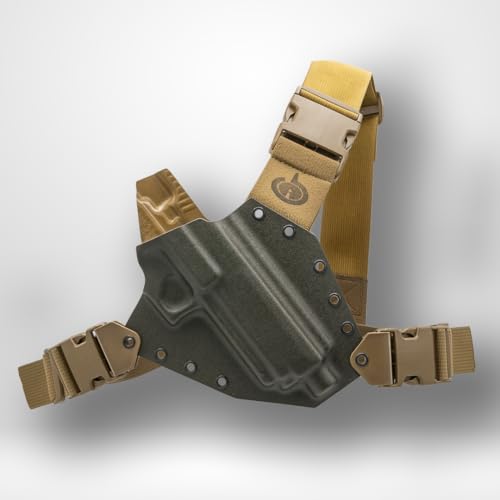
Kenai Chest Holster for a Sig P320 XTEN 10mm (MAS Grey/Coyote) (Right) (Does Not Fit Comp)
As an Amazon Associate we earn from qualifying purchases. Product prices and availability are accurate as of the date/time indicated.

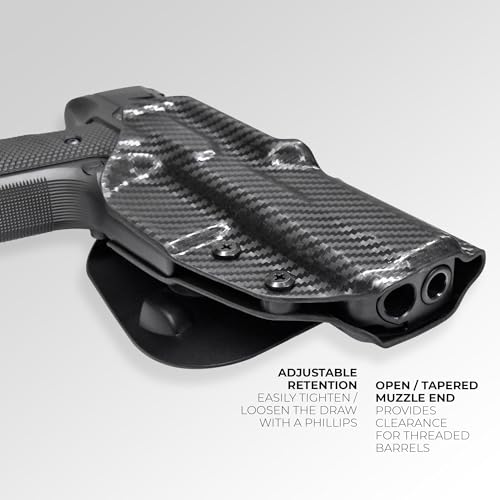
OWB Paddle Holster fits Sig P320 XTEN (Right-Hand Draw, Carbon Fiber)


As an Amazon Associate we earn from qualifying purchases. Product prices and availability are accurate as of the date/time indicated.

Outlaw Holsters Coyote USA OWB Holster (Right-Hand, Sig Saur P320-XTEN Compact), Black


As an Amazon Associate we earn from qualifying purchases. Product prices and availability are accurate as of the date/time indicated.
Prices shown are approximate and for reference only. Prices change often, so please check the current price on Amazon before you buy.
Fit by exact model and configuration, light and optic compatibility, shell material, retention pattern, ride and cant provisions, and hardware are each maker’s stated details for the current version, and the XTen Comp’s compensated fit must be confirmed by name in the maker’s fit list for the exact configuration carried before ordering. Ratings are editorial for this pistol: exact compensated fit and full guard coverage, tested retention, carry geography honestly served, hardware and mouth integrity for a safe reholster, and support.
Detailed Reviews: Best Holster for Sig P320 XTen Comp Picks
1. GunfightersINC Kenai – Best Overall
GunfightersINC’s Kenai takes the overall rating because it carries this pistol where this pistol belongs in its line: on the chest, in a shell in its pattern fitted by exact model in its fit list, clear of the hip belt, the waders, and the seatbelt, accessible to a trained draw in the country the XTen Comp was built for, with a harness in its design that spreads a 10mm’s day-long weight across a torso instead of negotiating with a waistband. For the field owner, it is not the alternative. It is the answer.
Its draw is its own trained skill, learned dry under instruction as the guide directs. Trained, it earns its place outright.
2. BlackPoint Tactical OWB Class – Best OWB for Range and Field
BlackPoint’s outside-the-waistband patterns serve the belted life in its line, Kydex and leather-wing designs in its patterns that hold a full-size pistol close and high in its geometry, for the range, the ranch, and the cold-weather cover garment, behind a maker’s support in its provisions this site has recorded across its range. Confirm the compensated fit by name, as every row here directs, and it is the belt’s best citizen in this table.
Its concealment is a cover garment’s, honestly. As the OWB, it stands.
3. Tier 1 Axis Class – Best IWB Attempt
Tier 1’s rig is the determined concealer’s pattern in its line, a shell and carrier in its design that distribute this pistol’s considerable real estate across the waist’s front, for the large-framed owner whose wardrobe and training are built around it. This guide’s honesty about the undertaking is its respect for it: fitted, trained, and dressed for, it works; improvised, nothing this size does.
Its price counts its hardware fairly. For its citizen, it is soundly placed.
4. Garrett Silent Thunder Class – Best Finish Care
Garrett’s leather-lined Kydex answers the owner whose XTen Comp is also an object of pride in its line, a lining in its pattern that quiets the draw in its terms and treats the slide’s finish as a guest, in a shell whose coverage and retention remain a Kydex citizen’s. A field pistol earns its wear honestly, but there is no law that its holster must administer it daily.
Its lining is a care item, kept clean by its maker’s pattern. As the finish pick, it earns its place.
5. Vedder LightTuck Class – Best Adjustable IWB
Vedder’s patterns serve the owner tuning an inside-the-waistband fit in its line, ride and cant adjustable in its design across a range in its provisions that lets a full-size pistol find its least impossible station, with a maker’s fit list in its range to be consulted for this exact model with the rigour the whole article demands. Its adjustability is a fitting session, conducted dry, at home, once, and then secured and audited.
For the methodical owner, it is the IWB value.
6. 2A Holsters Class – Best Small-Maker Value
2A’s patterns close the table with the small maker’s virtues in its line, model-specific Kydex in its design across waist and chest patterns in its range, at prices that let a field owner own the chest and the belt answers without a flagship’s tariff, with fits confirmed by the maker’s own answer where a specific compensated model is in question, a correspondence small makers commonly answer like craftsmen.
As the value row, it completes the table honourably.
Buying Guide: How to Choose the Best Holster for Sig P320 XTen Comp
The Exactness Audit, in the Only Safe Order
Write the audit’s five facts before a listing is opened, in this order, because the order is the safety. First, the law: the owner’s authority to carry this pistol, in the manner and the places intended, field, vehicle, and town each with their own provisions in the jurisdiction’s current rules, checked as a season is checked. Second, the configuration, frozen and photographed: the XTen Comp by its full name, its light, its optic, its sights, exactly as carried, against which every candidate’s fit list is read by name, compensated, with any maker who cannot name it treated as a maker who does not make it, whatever their P320 page implies. Third, the geography: chest for the field and the pack, OWB for the belt and the cover garment, IWB for the determined, chosen by the owner’s actual days and not by a photograph’s promise. Fourth, the belt or the harness, the gun belt’s stiffness or the chest rig’s fit in their makers’ figures, sized and tried as a system, because this pistol’s weight grades its furniture before it grades its shell. Fifth, the training plan, the dry progression, the instruction, and the mileage by which a new system earns trust, short and supervised before it is long and alone, in the pattern this site applies to every carry system it covers.
Test, then trust, in the standing progression and no other: verified unloaded, no ammunition in the room, the seat and the guard’s perimeter audited as this guide’s second section directs; the retention checked by the maker’s stated method; the draw and, with double patience, the reholster rehearsed slowly until the compensator’s clearance is a habit and not a hope; the system worn through a house day and a vehicle hour and a trail mile, its hardware re-audited at the end of each, thread security and clip tension in their makers’ provisions, because a full-size 10mm is a load that interviews every screw it is given. Only a system that has passed its ladder is carried loaded, in its lawful places, by an owner whose skills are current, and its first season’s audits are weekly, shell, mouth, guard, and fasteners, in daylight, with the log kept.
Care, Storage, and the Holster’s Service Life
Keep the system by the field’s own rhythm. The shell is cleared of the trail’s dust and the season’s sweat at the day’s end, its interior inspected for the grit that turns a mould into a lap, its hardware torqued by its maker’s figures, and its retention re-proven unloaded whenever its feel changes by a hair, because a shell’s manners are a diary of its wear. The pistol, at every day’s end, returns to locked storage by the household’s pattern, unloaded as the household’s rules direct for its storage state, ammunition locked separately, the holster aired and stored with the carry kit, and in a home with children that sequence is the article, the table, and the hobby’s whole ethic in one motion, performed before the boots are off. A holster is retired on evidence, a shell’s crack, a mouth’s collapse, a guard’s coverage compromised by wear or by a configuration change the mould never met, because a holster’s service life is a safety figure and its replacement cost is the smallest number in any story it could otherwise end.
Keep the record with the pistol’s own papers, holster, fit confirmation, configuration photograph, audits, and the maker’s correspondence, so that a light changed, an optic added, or a second XTen joining the household begins from documents and not from memory’s family resemblances. Teach the household’s rules to every person they touch, the safe’s absolutes and the holster’s privacy among them. Do that, fit named, guard covered, stroke trained, storage at both ends, and the best holster for Sig P320 XTen Comp becomes what a big, serious pistol deserves: an exact, rigid, unremarkable piece of safety equipment, carrying a compensated 10mm through field and winter as if it were the easiest thing in the world, which, fitted and trained and audited as this guide directs, is precisely what its owner has made it.
Frequently Asked Questions About Best Holster for Sig P320 XTen Comp
What is the best holster for Sig P320 XTen Comp?
GunfightersINC’s Kenai chest holster is the best overall for this pistol, carrying its full-size 10mm weight on the torso, clear of hip belts, waders, and seatbelts, in a shell fitted by exact model, with BlackPoint’s OWB patterns the belt and range choice, Tier 1’s rig the determined IWB attempt, Garrett’s lined Kydex the finish-care pick, Vedder the adjustable IWB, and 2A the small-maker value. Every choice is governed by this guide’s exactness rule, which outranks every rating in the table: the maker must name the XTen Comp, compensated, with your exact light and optic, in its own fit list, because a standard P320 or plain XTen mould can bind the compensator, seat the pistol short, and leave the trigger guard’s coverage incomplete, which are safety failures and not fitment opinions.
Will a regular P320 or XTen holster fit the XTen Comp?
Do not stake a trigger guard on it. The XTen Comp’s integrated compensator, in SIG’s design, lengthens and reshapes the slide’s front end with ports and a profile a standard mould never anticipated, so a holster drawn for the uncompensated pistol can bind the comp on the draw, hold the pistol short of its full seat with its guard coverage a fraction incomplete, or retain by friction on the comp instead of by its designed hold on the guard, each of which changes with heat, wear, and dust. Some owners will find a given open-muzzle pattern that physically accepts the pistol, and physical acceptance is not the test: the test is a full, repeatable seat, a guard covered to its whole perimeter with no gap an intruder can enter, the maker’s stated retention present every time, and a draw with no bind, all confirmed unloaded at home. If the maker does not name the compensated model, treat the fit as unmade and choose a maker in this guide who does, because the price of the correct shell is the smallest figure in the entire subject.
Is the XTen Comp too big to carry concealed?
It is at the honest limit of the undertaking, and this guide answers as it would at a counter. The pistol is a full-size 10mm, and its concealed life is real but narrow: outside the waistband under a genuine cover garment in its seasons, on the chest where the country and the wardrobe make a chest rig unremarkable, and inside the waistband only for the large-framed, well-trained owner whose whole wardrobe is built around it, in a dedicated rig of the Tier 1 pattern in this table, fitted and rehearsed dry until its longer draw, the compensator’s clearance counted, is a boring skill. What it will not do is disappear under light summer clothing on an average frame, and an owner told otherwise has been sold a second, smaller pistol’s biography. Most XTen Comp owners in this site’s readership carry it as the field instrument it was designed to be, openly where lawful or under winter cover, and carry something smaller in July, a division of labour this guide recommends without a flicker, because the best concealed system is the one whose concealment does not depend on hope.
How should I test a new holster for my XTen Comp safely?
Unloaded, at home, by the ladder, in this order and no other. Verify the firearm unloaded by your trained routine, with no ammunition in the room, and keep it so for the whole fitting. Seat the pistol fully, repeatedly, confirming the maker’s stated retention is present every time and inspecting the trigger guard’s whole perimeter, by eye and by fingertip, for any gap. Perform the maker’s retention check in its stated pattern. Rehearse the draw slowly across a session, feeling for any bind at the compensator, then the reholster more slowly still, looked in, garment held clear, finger indexed, for as long as it takes, since no lawful hurry requires a fast reholster. Wear the system through a house day, a vehicle hour, and a short trail walk, re-auditing hardware, clips, screws, and the shell’s mouth at each stage, with any failure answered by the maker’s support or the returns window and never by home re-moulding. Only a system that has climbed the whole ladder, in a configuration frozen and photographed, is carried loaded, in its lawful places, and its first season is audited weekly thereafter.
Related guides
- Best IWB Holster for MP 2 0 Compact in 2026: Fitted Kydex and Hybrids for the Smith and Wesson M&P M2.0 Compact
- Best Competition Holster for Sig P320 X5 in 2026: 6 Best Competition Holster for Sig P320 X5 Picks for Safe Draw, Fast Use, and Reliable Competition Use
- Best Gun Safe for Under Bed in 2026: How to Pick an Under Bed Gun Safe That Fits Your Bed and Keeps Your Firearm Secure
- Best IWB Holster for HK P2000SK in 2026: Fitted Kydex and Hybrid Holsters for Heckler and Koch’s Subcompact
More from Amazon
Programs that pair well with the guide above. Offers and eligibility are set by Amazon and may change.
Free shipping on eligible items, Prime Video and more. Eligible new members can start with a free trial.
Start a Prime free trialAudiobooks and podcasts to listen to on the go. Eligible new members can start with a free trial.
Try Audible freeAd-free music streaming. Eligible new subscribers can start with a free trial.
Try Music Unlimited freeA free business account with business pricing and bulk-buying tools for work, shop or home office.
Create a business accountAs an Amazon Associate we earn from qualifying purchases.

Write Your Review
No reviews yet. Be the first to share your experience!