
What's inside
As an Amazon Associate I earn from qualifying purchases. This post may contain affiliate links at no extra cost to you.
The best glock 26 owb holster is chosen around the little pistol’s one physical peculiarity: the Glock 26 is a short, thick, top-heavy handful, a double-stack grip of nearly full size carried on a slide barely longer than its subcompact name promises, and in an outside-the-waistband holster that geometry wants to tip, the grip’s weight levering away from the belt while the short slide offers the holster little length to stabilize against. The OWB holsters that serve the Baby Glock well are therefore the ones that hold it high and tight, pancake designs whose wide belt slots pull the grip into the body’s curve, paddles engineered against the roll, and belt slides that keep the muzzle’s short line close, in Kydex or leather whose retention is molded to the exact pistol, trigger covered completely, since a holster is a safety device before it is a convenience. This guide grades six real, currently sold OWB holsters for the Glock 26 on ride, retention, concealment under the cover garments OWB requires, and draw consistency, inside the frame this site never leaves: carry only where lawful for you, under your permit or your state’s framework; fit-test and rehearse only with the pistol verified unloaded, magazine removed and chamber checked visually and physically; and store the pistol locked and separate from ammunition whenever it is not carried, in the home’s secure storage and away from every unauthorized hand.
Understand what OWB asks of the Glock 26 carrier before the table, because the carry method has a contract: the holster rides outside the belt, which buys the fastest, most comfortable draw in the waistband family and charges for it in concealment, the pistol’s outline living under a cover garment whose length and drape become part of the system, an untucked shirt, a jacket, a vest, chosen with the grip’s bottom corner in mind, since that corner, not the slide, is what prints. The subcompact’s short slide helps here, nothing protrudes below the belt’s line to betray the muzzle, and its thick grip argues for the holster that cants and tucks it, a forward cant in the fifteen-degree class rolling the grip’s rear into the body’s shadow for most builds. The belt is the system’s foundation in a way new carriers underestimate: a proper gun belt, stiffened for the purpose, carries the OWB rig without the sag that turns a close-riding holster into a low, loose one by the afternoon, and this guide treats the belt as part of every recommendation below, an accessory whose absence voids the holster’s engineering more completely than any other single omission.
Our Top Picks
Best Glock 26 OWB Holster: Ride Height, Retention, and Cover Garments
Pancake, Paddle, and Belt Slide: The Three OWB Architectures
The pancake is the concealment architecture: two panels, flat or molded, with belt slots fore and aft that spread the pistol’s weight along the belt and pull its grip into the body as the belt is tensioned, the design riding closest of the three and printing least under the cover garment, at the cost of threading the belt at every donning. The paddle is the convenience architecture: a contoured paddle inside the waistband, the holster outside, donned and removed without unthreading, serving the carrier whose day includes the safe’s comings and goings, the office, the school run’s legal boundaries, at the cost of riding a fraction further from the body and depending on the paddle’s engineering against the tipping the Glock 26 invites. The belt slide is the minimal architecture: a short body, sometimes a Yaqui-style slide, that carries the pistol by its frame and leaves the slide’s end exposed, compact and fast, with the least retention real estate and a muzzle that can be pushed up from below by a chair’s arm or a seat’s edge, a failure the slide user must consciously manage. All three are legitimate; the buyer’s day, garment, and removal rhythm choose among them, and the table grades the best citizen of each rather than pretending one architecture wins a contest the others were not entering.
Retention and the Trigger Rule for a Short, Thick Pistol
Retention on the Glock 26 must be judged with its geometry in the hand: friction retention in molded Kydex, tuned by the holster’s adjustment to the click that signals a seated pistol, is the class’s standard and is entirely sufficient for the concealed carrier’s day, while open carry, where lawful, and any duty-adjacent use argue for an active device, a thumb release or a hood, that a stranger’s hand cannot defeat by a straight pull. The trigger rule admits no architecture’s exception: the holster must cover the trigger guard completely, in a material that cannot fold into it, since the Glock’s safety is its trigger’s design and the holster is that design’s appointed guardian; leather that has softened into the guard and universal nylon that drapes are the two documented villains of the discipline’s incident reports, and neither appears in this table. Test retention as the steps teach, unloaded, the holstered pistol inverted and shaken over a bed, the draw rehearsed against the cant and the cover garment until the stroke is one motion, because the Glock 26’s short purchase punishes a sloppy draw’s first inch more than its longer brothers do, and the holster that holds it high gives the hand its best start.
Generation and Accessory Fit: Gen 5, Lights, and the MOS Question
Order the holster by the pistol’s exact generation and furniture, because the Glock 26’s long production has made its name cover meaningfully different frames: the Gen 5’s ambidextrous slide stop and absent finger grooves, the earlier generations’ rails or their absence, and the owner’s additions, a weapon light being the fitment that most often orphans a holster, since a light-bearing rig is molded around the light’s body and a non-light holster will not accept the combination at all. The subcompact’s light options are the compact class, the TLR-7 pattern and its peers, and the buyer must decide the light question before the holster question, in writing, since the two purchases are one system. Red dots ride above the holster’s concern in most OWB designs, whose sweat guards and cuts in the better lines already clear the optic, but confirm the cut when ordering, as with the light, before the box arrives. Every fitment sentence in this section reduces to the guide’s standing one: the holster is molded to a specific pistol, and specific means generation, light, and optic, recited at the order like a checklist, because the return shipping of a wrong holster is the category’s most-paid tuition.
Best Glock 26 OWB Holster: Quick Comparison
| Glock 26 OWB Holster Model | Key Specs | Best For | Typical Price Range | Rating |
|---|---|---|---|---|
| Safariland 7378 / 7TS ALS class (Glock 26 fit) | Kydex-class ALS thumb release in line, paddle and belt options, active retention | Best glock 26 owb holster overall / open carry | $55 – $85 | 4.7 / 5 |
| Vedder ProDraw / LightDraw OWB class | Kydex pancake/paddle in class, adjustable retention and cant positioning in line | Best concealed OWB Kydex | $65 – $90 by model | 4.5 / 5 |
| Galco Concealable / Combat Master leather class | Leather pancake in class, forward cant positioning in line, belt slots | Best leather pancake | $110 – $150 | 4.5 / 5 |
| Alien Gear Cloak Mod / paddle class | Modular paddle in class, adjustable retention positioning in line | Best paddle convenience | $55 – $80 | 4.3 / 5 |
| Blackhawk Serpa / Omnivore class | Active retention in class (Serpa) / universal light class (Omnivore), paddle and belt | Best active-retention budget | $45 – $70 | 4.2 / 5 |
| DeSantis Mini Slide / Thumb Break Scabbard class | Leather belt slide in class, thumb break options in line, compact ride | Best leather belt slide | $70 – $100 | 4.3 / 5 |

BLACKHAWK Serpa CQC Belt Loop and Paddle Holster For Glock 26/27/33, Right Hand, Matte Black - 410501BK-R
As an Amazon Associate we earn from qualifying purchases. Product prices and availability are accurate as of the date/time indicated.

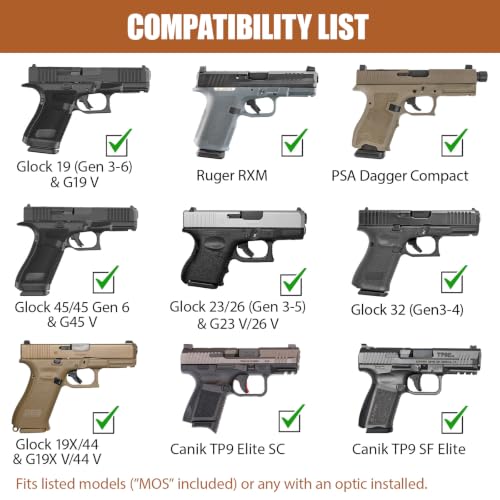
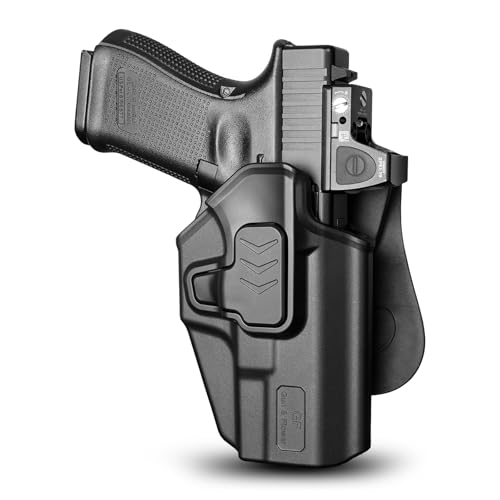
OWB Holster for Glock 19/19X/23/26/44/45(Gen 3-6) & Glock 32(Gen 3-4) & MOS | Also Fit Ruger RXM & PSA Dagger Compact & Canik TP9 Elite SC/TP9 SF Elite, Optic Cut, Level II Retention, Right-Hand


As an Amazon Associate we earn from qualifying purchases. Product prices and availability are accurate as of the date/time indicated.
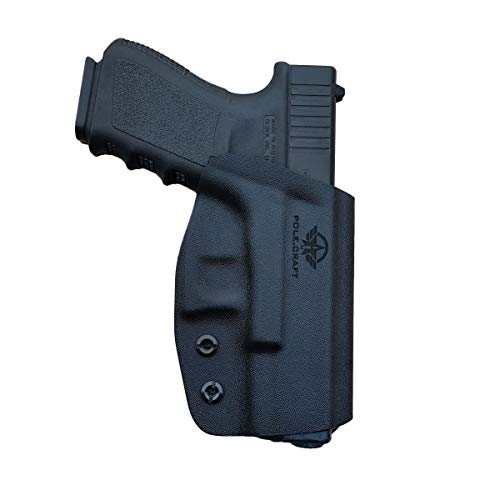
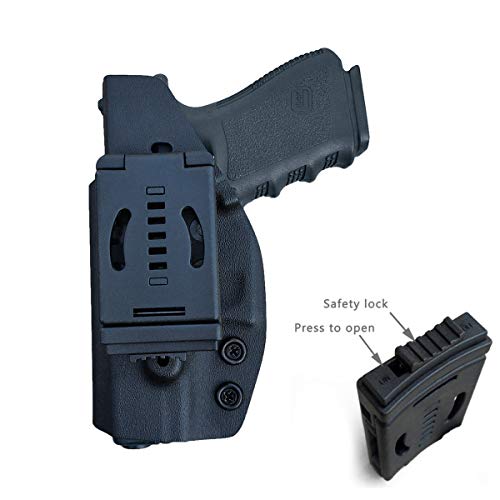
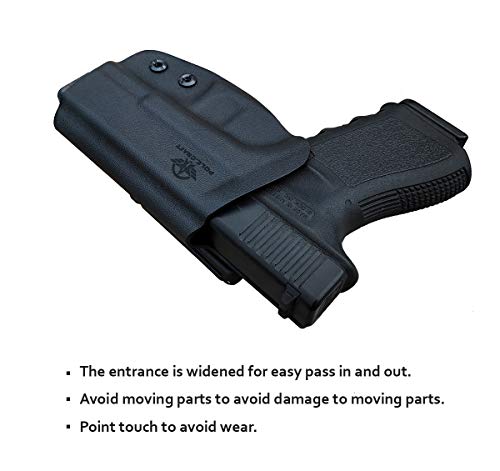
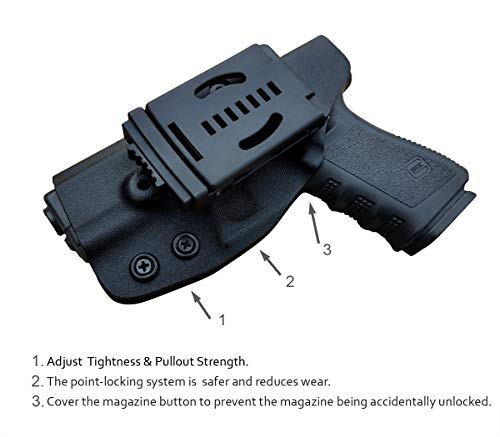
OWB Kydex Holster for Glock 19 19x 25 30s 44 45 17 Glock 26 (Gen 1-5) / 22 23 27 31 32 33 (Gen 3-4) Pistol, Waistband Outside Carry 1.5"-2" Belt Clip - Black, Right



As an Amazon Associate we earn from qualifying purchases. Product prices and availability are accurate as of the date/time indicated.
Prices shown are approximate and for reference only. Prices change often, so please check the current price on Amazon before you buy.
Confirm generation and light fitment for your exact Glock 26 before purchase. Ratings are editorial, weighing ride and anti-tip stability on the G26, trigger coverage and retention, concealment under cover, draw consistency, and value.
The Six Glock 26 OWB Holsters Reviewed
1. Safariland 7378 ALS: Best Overall
The Safariland leads on the strength of a retention system the duty world standardized on: the ALS thumb release, which locks the pistol by its ejection port and releases in the draw’s natural stroke, giving the open or concealed carrier an active security no friction fit claims, in a 7TS shell that shrugs off the weather and the years. On the Glock 26 it rides close for an active-retention rig, its paddle and belt-slide options cover both architectures, and its draw, rehearsed unloaded as the steps command, is famously a single lesson’s learning. For the carrier whose OWB is ever visible, and for the concealed carrier who simply prefers a lock, it is the recommendation this guide defends, a holster whose professionalism is its provenance.
2. Vedder OWB Class: Best Concealed Kydex
Vedder’s OWB lines serve the concealed carrier’s specific brief: Kydex molded to the pistol, riding high and tight in the pancake manner, with retention and cant adjustable to the body’s geometry and the cover garment’s demands. The fit for the Glock 26 across its generations and light options is the catalog’s strength, the finish is a working holster’s, and the whole rig disappears under an untucked shirt with an honesty the paddle class rarely matches. For the permit holder whose OWB is a concealment method rather than a statement, it is the first Kydex row, and its rating reflects a specialist executing the subcompact’s anti-tip brief with unusual care.
3. Galco Leather Pancake Class: Best Leather
Galco’s pancakes are the leather tradition at its competent best: premium hide molded to the pistol, a forward cant that tucks the Glock 26’s grip into the body’s line, belt slots that spread the load, and a ride whose comfort across a long day is leather’s standing argument against the synthetics. It asks leather’s prices and leather’s care in return, a break-in measured in days of carry, a retirement when the mouth softens, and it repays with a silence and a conformity no Kydex attempts. For the carrier whose cover garment is a jacket and whose taste runs traditional, it is the row where the material is the message, graded at the top of its craft.
4. Alien Gear Cloak Paddle Class: Best Paddle Convenience
Alien Gear’s paddle system serves the day of many removals: on and off without the belt’s unthreading, retention adjustable at the shell, in a modular family whose parts the owner can reconfigure as their carry evolves. On the subcompact it manages the tip better than the budget paddles by its paddle’s breadth and contour, while conceding the last fraction of closeness to the pancakes, the architecture’s known tax honestly paid. For the carrier whose lawful day is a patchwork of carry and secure storage, it is the convenience row with a professional’s retention, and its rating reflects a system bought for its rhythm and kept for its competence.
5. Blackhawk Serpa / Omnivore Class: Best Active-Retention Budget
Blackhawk’s lines bring active retention to the budget’s shelf, the Serpa’s finger release being the class’s most debated mechanism, its critics citing the trigger finger’s role in the release and its defenders a generation of service, a debate the buyer should enter knowingly, with training, or route around via the Omnivore’s thumb release and light-based universality. Their fit on the Glock 26 is established, their price is the table’s floor for a locking rig, and their materials are a working class’s. Graded as the budget’s active option with its controversy printed on its row, in this guide’s manner, it serves the informed buyer and warns the casual one in the same paragraph.
6. DeSantis Leather Slide Class: Best Belt Slide
DeSantis’s slides close the table with the minimal architecture done by a house that has made leather for generations: a compact scabbard, thumb-break security in its classic variant, riding the short pistol close with the least material in the table and a draw as fast as the method allows. Its exposed muzzle asks the management the architecture’s section described, the chair-arm push-up being the slide’s known hazard, consciously countered by the carrier’s habits. For the experienced carrier who wants the Glock 26 to vanish under a jacket with the smallest possible apparatus, it is the connoisseur’s row, and its rating honors a niche executed by its master.
Buying Guide: How to Choose and Set Up a Glock 26 OWB Holster
Step One: Recite the Fitment and Choose the Architecture by Your Day
Write the fitment before the brand: Glock 26, generation, light or none by exact model, optic or none, handedness, and belt width, and let no product enter the cart that does not match the whole recitation. Choose the architecture by the day’s honest description: the pancake for the carrier who dons once and conceals all day; the paddle for the day of lawful removals, each one ending in the pistol’s secure storage and never in a glove box’s improvisation; the slide for the jacketed minimalist who accepts its management. Add the belt to the same order if a proper gun belt is not already owned, stiffened, in the width the holster’s slots are cut for, since the rig’s ride is the belt’s autobiography, and set the cant at the order where the maker allows, the forward fifteen in its class being the subcompact grip’s best friend for most bodies.
Step Two: Fit-Test and Rehearse Unloaded, Then Live-Test the Garment
With the pistol verified unloaded, magazine removed and chamber checked visually and physically, and no ammunition in the room, seat it in the holster and audit the safety list in order: trigger guard covered completely, retention as designed, the click or the lock positive; the inverted shake over a bed passed; the ride checked in the mirror, high, tight, the grip’s corner tucked; and the draw and reholster rehearsed fifty times against the actual cover garments, shirt, jacket, the winter’s layers, since the draw that works in a t-shirt and fails in a coat is a coat problem discovered at the rehearsal’s price rather than the street’s. Adjust retention to the minimum that passes the shake with the draw still clean, mark the garment combinations that print, the short shirt retired from the carry wardrobe without sentimentality, and let the system, belt, holster, garment, be graded as one machine, because that is what it will be on the day it matters.
Step Three: Carry Lawfully, Store Locked, and Maintain the Rig
Run the carry inside your law’s whole text, the places and occasions your permit or your state allows and forbids, the employer’s and the school’s and the federal building’s rules each overriding the morning’s habit, with the pistol’s transfers, car to safe to holster, performed by the discipline this site’s vehicle guides teach, the pistol never loose in a console or a door pocket as a way of life. At home the pistol sleeps in locked storage, separate from ammunition, the holster beside it, and the rig is maintained on the month’s round: screws checked, Kydex inspected for the crack at the fold, leather read for the softening that retires it, retention re-verified by the shake, since a holster is a safety device with a service life and its inspection is part of the carry it enables. Kept so, the little Glock rides its years at your side unnoticed by the world and ready to its owner’s hand, which is the entire definition of the OWB craft, and the standard against which every row in this table was graded.
Frequently Asked Questions About Glock 26 OWB Holsters
Can you really conceal a Glock 26 in an OWB holster?
Yes, and the subcompact is better at it than its thickness suggests, provided the system is whole: a high, tight pancake or its Kydex equivalent pulling the grip into the body’s curve, a forward cant rolling the grip’s rear corner out of the silhouette, a stiff gun belt preventing the sag that prints by posture, and a cover garment with the length to clear the grip when you reach and bend, tested by the mirror rehearsal of the steps rather than by hope. What prints is the grip’s bottom rear corner, and every element of the system is aimed at that corner; what defeats concealment is never the slide, which the belt hides by geometry, but the single omission, the fashion belt, the short shirt, the straight-drop holster, that the rehearsal exists to catch. The carrier who runs the system honestly can keep the Baby Glock a private fact under an untucked shirt through a working day, as a generation of plainclothes officers carrying exactly this pistol can attest, and the one who cannot should change the system, not the pistol, since the pistol was never the problem.
OWB or IWB for the Glock 26?
The honest division is comfort and speed against concealment’s margin: OWB draws faster, sits more comfortably across a long day, and asks a real cover garment as its price; IWB conceals under less, a tucked shirt being within its repertoire in the right rig, and charges in comfort, in the waistband’s sizing, and in a draw that must clear more architecture. The Glock 26’s dimensions argue both ways with unusual fairness, its short slide making OWB’s muzzle concealment trivial and IWB’s package compact, its thick grip being the tax both methods pay. Most carriers of this pistol end, as the holster drawer of history attests, owning both, the OWB for the jacket months and the open-cover days, the IWB for the summer’s thin shirt, and this guide’s advice is to buy the first for your majority season at the quality of this table, since a cheap version of either teaches the method’s vices rather than its virtues, and the method, once fairly learned, will tell you itself whether the second rig is wanted.
Do I need active retention on an OWB holster?
It depends on who can reach your pistol, which is the retention question in its true form. The concealed carrier, whose holster lives under a garment no stranger knows to reach into, is served completely by molded friction retention honestly adjusted and verified, the standard of this table’s Kydex and leather rows. The open carrier, where lawful, the uniformed or plainly visible rig, and any environment of crowds, physical work, or struggle risk, argues for the active device, the ALS class of the first row, because a visible pistol is an object in the world’s space and its retention must defeat the world’s hands, not merely gravity. Between the poles sit the judgment calls, the rural carrier whose OWB is open at the ranch and covered in town, commonly answered with the active rig worn under the garment, a small draw-stroke tuition paid for a universal security. Decide by your exposure rather than by fashion, rehearse whichever you choose to the standard of the steps, and remember that retention you cannot release under stress is a lock without a key, which is why the rehearsal, unloaded and repeated, is not a suggestion in this guide but its recurring commandment.
Will a Glock 19 holster fit my Glock 26?
Sometimes, and the sometimes must be verified rather than assumed, because the relationship is real: the 26 shares its frame’s front geometry with its bigger brothers, and many holsters molded for the 19 accept the 26 with the slide simply ending earlier in the shell, retention, which is taken on the trigger guard and frame, remaining sound. The failures hide in the specifics, a holster whose retention or fit depends on the slide’s length, a light-bearing rig molded to the longer gun’s light position, a generation mismatch between the holster’s pistol and yours, each capable of producing a fit that feels plausible and is not. The professional procedure is the maker’s own fitment chart, which commonly lists the 26 explicitly where the fit is sanctioned, followed by the full unloaded audit of the steps, trigger coverage, retention, the shake, on your pistol in the actual holster before it is carried. Where the chart is silent, buy the holster molded for the 26 itself, since the Baby Glock’s popularity means its own fitments exist in every architecture in this table, and a subcompact carried daily deserves a holster that was designed around its peculiar, tippy geometry rather than one that tolerates it as a guest.
Related guides
- Best Thigh Holster in 2026: How to Pick a Thigh Holster That Is Secure, Comfortable, and Fits Your Pistol Perfectly
- Biometric Lock Reliability for Daily Use in 2026: Biometric Lock Reliability for Daily Use
- Best LCP Ankle Holster in 2026: 6 Comfortable Ankle Holsters for the Ruger LCP
- Best Holster for Walther CCP M2 in 2026: 6 Concealed Carry Holsters for Comfort and Safety
More from Amazon
Programs that pair well with the guide above. Offers and eligibility are set by Amazon and may change.
Free shipping on eligible items, Prime Video and more. Eligible new members can start with a free trial.
Start a Prime free trialAudiobooks and podcasts to listen to on the go. Eligible new members can start with a free trial.
Try Audible freeAd-free music streaming. Eligible new subscribers can start with a free trial.
Try Music Unlimited freeA free business account with business pricing and bulk-buying tools for work, shop or home office.
Create a business accountAs an Amazon Associate we earn from qualifying purchases.




Write Your Review
No reviews yet. Be the first to share your experience!