
What's inside
As an Amazon Associate I earn from qualifying purchases. This post may contain affiliate links at no extra cost to you.
The best cable lockbox for vehicle durability is not a safe, and any guide that lets you believe otherwise is doing you a disservice. It is a hardened steel box, tethered to your vehicle with a braided steel security cable, designed to do three specific jobs: keep a firearm out of unauthorized hands during a short, lawful stop, slow a smash-and-grab thief long enough that they move on, and survive years of heat, vibration, dust, and being kicked under a seat without its lock failing or its cable fraying into uselessness. That durability question is what separates the serious products in this category from the thin tin boxes sold at checkout counters. A vehicle is a brutal environment for a lockbox. Summer cabin temperatures can climb well past 140 degrees, winter nights drop below freezing, the box slides on floor pans, gets stepped on by passengers, and lives in road grit. This guide compares real, currently sold cable-tethered lockboxes on the things that actually determine service life: steel gauge, cable construction and anchoring, lock type and failure history, hinge design, interior protection, and fit for common carry pistols.
Start with the legal and safety frame, because a vehicle lockbox only makes sense inside it. Laws on transporting and storing a firearm in a vehicle vary sharply by state and city, including rules on loaded versus unloaded condition, ammunition separation, locked-container definitions, and where you may lawfully leave a vehicle with a firearm inside at all. Some jurisdictions and employers prohibit vehicle storage entirely in certain places, such as school grounds, federal facilities, and posted properties. Check your current state and local law from official sources before you rely on any lockbox, and re-check when you travel across state lines. The standing safety rules never change: handle the pistol as if loaded until you have verified it unloaded yourself, magazine removed and chamber checked visually and physically, muzzle pointed in a safe direction throughout; unload before you stow, unless your jurisdiction and your training specifically provide otherwise and you have a holster that fully covers the trigger guard inside the box; keep ammunition stored as your law requires; and never treat the lockbox as long-term storage. A vehicle is the most stolen-from and most stolen itself location a firearm can occupy. The lockbox is a layer for brief, necessary stops, not a substitute for taking the pistol with you where lawful or securing it in a proper home safe. When children or unauthorized adults may ride in the vehicle, the lockbox is locked, every time, without exception, and the key or combination is never kept inside the vehicle with it.
Our Top Picks
 Grimtron Portable Electronic Car Gun Safe for Handgun11.02 x 7 x 1.85 inches11.02 x 7 x 1.85 inches3.7 poundsCheck on Amazon
 Biometric Gun Safe Small Fingerprint Pistol Case forSmall11.4 x 7.1 x 2.5 inches4.65 poundsCheck on Amazon
What Durability Means in a Cable Lockbox for Vehicle Use
Steel Gauge, Welds, and Hinge Design
Durability starts with the box itself. Serious vehicle lockboxes are formed from 16-gauge to 18-gauge steel, with a few heavy models using thicker stock on the lid. Thinner 20-gauge and 21-gauge boxes exist at the bottom of the market and are the ones that deform when stepped on and pry open at a corner with a screwdriver. Look for a lid that overlaps the body rather than meeting it flush, because an overlapping, pry-resistant lip denies a tool a starting gap. Hinges matter more than most buyers realize: a continuous piano hinge or an internal hinge that cannot be punched out from outside will outlast exposed barrel hinges whose pins a thief can drift out in seconds. Weld quality is visible if you know to look, with clean, continuous beads at the corners rather than spot tacks, and a powder-coat or similar finish that resists the rust that floor moisture and spilled drinks guarantee over a vehicle’s life. Foam lining is not a luxury; it keeps the pistol from battering itself against steel on every braking stop, protects the finish, and stops the rattle that advertises the box to every passenger.
The Cable Is the System, Not an Accessory
A cable lockbox is only as durable and only as secure as its tether. The cable should be braided or stranded steel, typically around 1,500 to 2,000 pound rated class in the better products, long enough to loop around a seat rail, seat mounting bracket, or trunk hinge and return to the box, and coated so it does not saw through upholstery or its own anchor paint. How the cable attaches to the box is the detail that decides real-world life: a cable that passes through reinforced slots and locks inside the box, or is permanently anchored with a swaged fitting, survives; a cable clipped to a thin external tab tears that tab out. Inspect the swages and ferrules, because a poorly crimped ferrule is the most common field failure in this whole category, letting the loop pull free under a hard yank. Route the cable around a structural member, never around a plastic trim piece, a headrest post that lifts out, or a seat rail section that unbolts by hand. The goal is a tether that requires tools and time to defeat, matched to a box that requires the same, so no single weak parish gives the whole system away.
Locks: Key, Combination, and Their Failure Modes
Most durable vehicle lockboxes use a tubular or wafer key lock, a three or four digit mechanical combination, or both. Each has a durability profile. Key locks are fast and work with gloves, but the key must live on your person, not in the center console, and cheap wafer locks wear until they accept sloppy keys. Mechanical combinations avoid key management and work after years in the heat, but small dials are slow under stress and in the dark, and bargain mechanisms develop play that makes the code guessable by feel. Electronic keypads are rare in pure cable boxes for a reason: vehicle heat and dead batteries are hard on them, and the better quick-access vehicle safes that use electronics are generally bolt-down units rather than cable boxes. Whichever you choose, cycle it monthly, because a lock that is never worked in a dusty vehicle is a lock that will choose the worst moment to seize. A drop of graphite, not oil, keeps a vehicle lock alive without gumming it with grit.
Best Cable Lockbox for Vehicle Durability: Comparison Table
| Model | Steel and Size Class | Lock and Cable | Typical Price Range | Rating |
|---|---|---|---|---|
| Snapsafe Lock Box XL | 16-gauge steel, extra-large interior fits most full-size pistols with room for a spare magazine | Key lock, heavy steel security cable included, foam lined | $40 – $60 | 4.6 / 5 |
| Hornady Lock Box XL | 16-gauge steel, extra-large footprint, dense foam interior | Barrel key lock, braided steel tether cable included | $35 – $55 | 4.5 / 5 |
| GunVault NanoVault 200 | 18-gauge steel, compact size for subcompact and many compact pistols | Key lock, steel security cable included, meets many locked-container standards as published by maker | $35 – $55 | 4.4 / 5 |
| Fort Knox Auto Pistol Safe class | Heavy 10-gauge class body in maker’s auto line, compact vehicle footprint | Mechanical push-button lock class, cable or bolt mounting by model | $250 – $350 | 4.7 / 5 |
| VAULTEK LifePod class | High-impact polymer weatherproof case, compact pistol size, not a steel box | Touch keypad with key backup, steel security cable included | $110 – $160 | 4.3 / 5 |
| Stack-On Portable Security Drawer / Case class | Steel portable case class, low-profile under-seat dimensions | Key or combination by model, tether cable included in case versions | $30 – $55 | 4.1 / 5 |
Grimtron Portable Electronic Car Gun Safe for Handgun with Security Cable | Small Gun Lock Box with Silent Mode & Emergency USB Power Supply, Single Pistol Safe for Travel, Vehicle, Truck, Nightstand


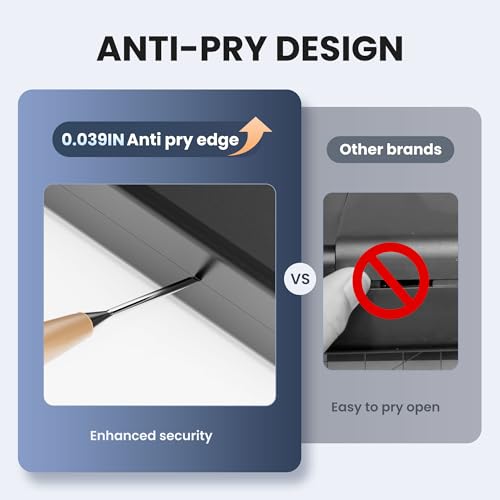


As an Amazon Associate we earn from qualifying purchases. Product prices and availability are accurate as of the date/time indicated.
Biometric Gun Safe Small Fingerprint Pistol Case for Car,Fits 1-2 Handguns | Portable Travel Gun Case,3 Ways Quick Access Pistol Safe,Security Cable,Power Supply,Vehicle,Nightstand,Bedside,Drawer


As an Amazon Associate we earn from qualifying purchases. Product prices and availability are accurate as of the date/time indicated.
Prices shown are approximate and for reference only. Prices change often, so please check the current price on Amazon before you buy.
Specifications above reflect the makers’ published classes for the current versions of these product lines; dimensions and included hardware vary by exact SKU, so confirm interior measurements against your pistol, with its holster if you plan to stow it holstered, before ordering. Prices are typical US street ranges, not single offers, and ratings are editorial, weighted toward steel and cable durability, lock reliability in vehicle conditions, and honest fit.
Reviews: The Lockboxes That Hold Up in a Vehicle
Snapsafe Lock Box XL: The Durable Default
The Snapsafe XL is the box this category is judged against for a reason: honest 16-gauge steel, a lid with real overlap, foam that has not crumbled after years in trucks, and a cable that anchors through the box rather than clipping to it. It swallows a duty-size pistol, which also means it is too large for some under-seat spaces, so measure. Its key lock is simple and that is the point; there is little to fail. For most owners who need a tethered box for lawful short stops, this is the recommendation defended first.
Hornady Lock Box XL: Same Parish, Strong Value
Hornady’s XL competes directly with the Snapsafe on gauge and size, with a well-finished interior and a tether cable of similar class. Owners who run both tend to pick by price on the day and by which key profile they prefer. It earns its row by matching the standard rather than by gimmicks, and its durability record in fleet and range vehicles is the kind of evidence that matters more than any laboratory claim.
GunVault NanoVault 200: The Compact That Fits
Many vehicles simply cannot hide an XL box, and the NanoVault 200 exists for them. Its 18-gauge steel is a step thinner, traded knowingly for a footprint that slides under seats and into smaller consoles’ adjacent spaces. It suits subcompact and slim compact pistols. The durability advice is to be honest about that trade: you gain concealment and fit, you give up some pry resistance, and the cable discipline in the next section matters even more.
Fort Knox Auto Class: When Durability Is the Whole Brief
Fort Knox builds to a different parish entirely, with steel thickness and a mechanical lock that belong to the small-safe world. The cost and weight are in another class too, and not every model is a pure cable box, so read the exact mounting before buying. For a work vehicle that carries daily and lawfully, and where the box will be opened thousands of times, this is the buy-once answer.
VAULTEK LifePod Class: The Weatherproof Outlier
The LifePod is polymer, not steel, and it is included with that stated plainly because its durability question is different: it shrugs off water, dust, and drops that dent thin steel, seals against the elements, and floats in its class. Against pry tools it is not a Snapsafe. For boat and beach vehicles, and for owners whose main enemies are weather and curious children rather than equipped thieves, it has a real parish, tethered by its included cable and locked every time.
Buying Guide: How to Choose a Cable Lockbox for Vehicle Durability
Step One: Measure the Pistol, the Holster, and the Hiding Place
Measure three things before you look at prices. First, your pistol’s length, height, and width, adding the holster if you will stow the pistol holstered, which is the safer practice for a loaded-where-lawful carry gun because the trigger guard stays covered during handling. Second, the exact space you intend to use: under the driver’s or passenger’s seat with the seat in your driving position, in the trunk, or in a cargo area, checking for seat motors, airbag wiring, and heating ducts you must not obstruct or chafe. Third, the structural anchor within cable reach of that space. A box that fits the pistol but not the vehicle, or fits the vehicle but cannot be tethered to structure, fails the brief no matter how thick its steel is. Write the three measurements down and shop against them, not against a product title that says universal.
Step Two: Grade Steel, Cable, and Lock as One System
Use a single pass-fail audit. Steel at 16-gauge to 18-gauge with an overlapping lid and a protected hinge passes; thinner stock or an exposed pin hinge is a known compromise you should only accept for fit, consciously. The cable must anchor through or inside the box, show clean swaged ferrules, and be long enough to loop structure and return without strain. The lock must be operable by you, in the dark, with cold hands, in under a few seconds, and you should plan to cycle and inspect it monthly. Reject any box whose marketing promises it will defeat a determined thief with power tools; none will, and a maker who claims it is telling you how to misjudge the product. What you are buying is time, noise, and tool requirements that defeat the opportunist and protect the unauthorized and the curious, which is the honest office of this whole category.
Step Three: Install, Rehearse, and Maintain It Like Vehicle Equipment
Install on a day when you can work unhurried. Verify the pistol unloaded, magazine removed and chamber checked visually and physically, before any fitting. Route the cable to structure, confirm the box does not slide into a footwell or interfere with pedals, seat travel, or airbag zones, and confirm a passenger cannot see it from outside the glass. Rehearse opening, stowing, and locking until it is boring, because the real use will be in a parking lot when you are late. Then maintain it as vehicle equipment: monthly lock cycling and cable inspection for frayed strands or a slipping ferrule, foam replaced when it crumbles, a rust check at the corners each season, and the box emptied and the pistol returned to your home safe at the end of every day the law and your circumstances allow. Keep a simple log if the vehicle is shared or used for work; knowing when the box was last inspected is part of durability too.
Frequently Asked Questions About Cable Lockboxes for Vehicles
Is a cable lockbox legal for storing a pistol in my vehicle?
It depends entirely on your jurisdiction, and in some places and situations vehicle storage is restricted or prohibited regardless of the container. Many states define a locked container or a locked vehicle compartment in statute, and a quality steel lockbox tethered inside the vehicle may meet that definition for transport or short storage, while other states require the firearm to be unloaded, require ammunition to be separate, or require the container to be in the trunk or a locked compartment out of reach of the driver. Some locations, including certain cities, school zones, federal property, and posted private property, bar the practice altogether. Read your current state and local law from official sources, check the rules for any state you drive into, and when in doubt ask a qualified local attorney. No product rating in this guide is legal advice, and a box that is lawful equipment in one state line can be the wrong side of the law across the next.
Will a cable lockbox stop a thief from stealing my pistol?
No lockbox will stop a determined, equipped thief, and you should plan around that truth. What a durable steel box on a properly routed cable does is defeat the common vehicle break-in, which is a thirty-second smash, grab, and run: the box cannot be simply picked up, the cable cannot be cut with the knife or light snips usually at hand, and prying a 16-gauge overlapping lid takes time, tools, and noise the opportunist will not spend when the next vehicle has a pistol visible in a console. That is a real and worthwhile layer, and it is why steel gauge, hinge protection, and cable anchoring dominate this guide. It is also why the first rule of vehicle storage is not to leave a firearm in a vehicle longer or more often than law and necessity require, to park and choose stops with judgment, and to bring the pistol into your home safe at day’s end. The lockbox buys minutes and protects against unauthorized access; your habits provide the rest of the security.
Should the pistol be loaded or unloaded inside a vehicle lockbox?
Follow your jurisdiction’s law first, because several states require an unloaded condition for vehicle transport or storage, with ammunition stored separately. Beyond the law, the safer default for a lockbox used for stops during a day of errands is the condition your training and your equipment support without compromise: many trained carriers who lawfully carry loaded keep the pistol in a proper holster that completely covers the trigger guard, verify nothing can enter the guard inside the box, and stow and retrieve with strict muzzle discipline and a safe direction. Others, and any owner who is not fully confident in that handling, should stow unloaded, magazine removed, chamber verified empty visually and physically, with ammunition kept as their law directs. What is never acceptable is a loose, unholstered pistol with an exposed trigger guard rattling in a steel box, or handling to load or unload in a public parking lot beyond what is necessary. Decide your condition at home, rehearse it unloaded, and keep it consistent.
How long should a good vehicle lockbox last, and when should I replace it?
A quality 16-gauge steel box with a sound lock should last many years of daily vehicle use, and its service life ends by inspection findings rather than by birthday. Replace or retire it when you find any of these: a cable with broken strands, a kink that will not straighten, or a ferrule that has moved; a lid that no longer closes flush or a hinge with play that was not there before; a lock that sticks, accepts the key sloppily, or whose combination has developed loose, guessable travel; rust that has moved past surface discoloration into pitting at a corner or seam; or foam that has crumbled enough to let the pistol strike steel. Also replace the box after any attempted break-in, even an unsuccessful one, because pry damage is often internal and the next attempt starts where the last one weakened it. Monthly cycling and a seasonal inspection take five minutes and are the difference between a durable system and a box you merely hope is durable on the day it is tested.
Related guides
- Biometric Safe in 2026: How to Choose a Fingerprint Safe for a Handgun That Opens Reliably and Stores It Securely
- Lock&Lock LHC8034 in 2026: 6 Best LocknLock LHC8034 Containers for Lunch, Meal Prep, and Fresh Food Storage
- Lock&Lock 500ml in 2026: 6 Best LocknLock 500ml Containers for Lunch, Snacks, and Meal Prep
- Best Lock&Lock 300ml in 2026: Lock&Lock 300ml Food Containers Compared for Lunch and Storage
More from Amazon
Programs that pair well with the guide above. Offers and eligibility are set by Amazon and may change.
Free shipping on eligible items, Prime Video and more. Eligible new members can start with a free trial.
Start a Prime free trialAudiobooks and podcasts to listen to on the go. Eligible new members can start with a free trial.
Try Audible freeAd-free music streaming. Eligible new subscribers can start with a free trial.
Try Music Unlimited freeA free business account with business pricing and bulk-buying tools for work, shop or home office.
Create a business accountAs an Amazon Associate we earn from qualifying purchases.



Write Your Review
No reviews yet. Be the first to share your experience!