
What's inside
As an Amazon Associate I earn from qualifying purchases. This post may contain affiliate links at no extra cost to you.
The best OWB holster for Walther PPS begins with a fit warning that outranks every recommendation in this article, because “Walther PPS” is two pistols wearing one name. The original PPS, often called the PPS Classic or M1, is the paddle-release, rail-distinct first generation, and the PPS M2 is the button-release, reshaped second generation that replaced it, and their frames, trigger guards, and slides differ enough that a holster molded for one will not correctly fit the other, however similar they look in a photograph. Add the parish’s other variants, the PPS M2 LE editions, pistols with and without mounted lights, and the red dot citizens of the M2’s later production, and the PPS holster purchase becomes what this guide treats every exact-fit purchase as: a variant census taken before a single holster is admired, the pistol’s generation, its release type, its light, and its optic written down and matched, line by line, against the holster maker’s own fit list for the exact model being ordered. A holster that almost fits a PPS is not a PPS holster with a personality. It is a retention failure and a trigger-guard coverage question waiting for their moment, and both are disqualifying in a parish where the holster’s whole commission is to cover the trigger completely, retain the pistol through movement, and release it only to the owner’s draw. This guide compares the real OWB holsters sold today for the PPS family, graded on exact fit, retention, ride, and build, inside this site’s standing frame: carry is lawful carry only, under the permits and rules of your jurisdiction, which govern where and how a pistol may be carried and which the owner is responsible for knowing from official sources, and at home the pistol lives in a safe or lockbox, unloaded, separate from ammunition, with every fitting and practice session in this text conducted on a verified unloaded pistol, magazine removed and chamber checked visually and physically, or on a dedicated inert trainer of the same model.
The PPS’s own parish explains its holster market. It is a slim, single-stack subcompact, a pistol bought to disappear, and most of its owners carry it inside the waistband, which makes its OWB parish a smaller and more deliberate one: the range and training holster, the open-carry and property holster where lawful, the winter citizen under a coat where OWB’s comfort and speed serve a concealed parish honestly, and the competition-adjacent trainer. That deliberateness is a virtue for the buyer, because the makers who still mold for the PPS, a pistol whose production parish has thinned as the market moved to double-stack micro citizens, tend to be the serious ones, the Kydex houses with deep fit lists and the leather citizens with long memories. It also imposes the buyer’s first discipline, availability honesty: confirm the maker’s current fit list names your exact PPS variant today, in the configuration being ordered, since molds retire and a listing’s photograph of a PPS is not a promise that your generation is among its citizens. OWB itself brings its standard parishes to the little pistol: it rides outside the belt, faster and more comfortable than IWB for most shooters, more exposed to knocks, weather, and the retention questions of open carry, and dependent for concealment on the cover garment in a way the PPS’s slimness rewards more than most, a PPS in a close-riding pancake under a winter coat being one of concealed carry’s genuinely invisible citizens. All of it begins, as this site begins every holster article, with the fit list.
Our Top Picks
Best OWB Holster for Walther PPS: Fit by Generation, Retention, and Ride
PPS vs PPS M2: The Variant Census That Decides Everything
The census is short and absolute. Generation first: the original PPS carries a magazine release in the trigger guard’s parish, a paddle worked by the finger, a distinctive rail, and a frame and slide profile of its own; the PPS M2 carries a conventional button release, a reshaped grip and slide, and no paddle, and a glance at the release settles the generation beyond argument. Accessories second: a mounted light changes the mold entirely, the holster retaining on the light’s body in the light-bearing parish, so a light holster fits only its named light and a non-light holster fits no light at all; an optic changes the holster’s top parish, requiring the optic cut whose absence cannot be improvised at home without voiding the maker’s work and the holster’s safety. Handedness and belt width complete the census, the PPS’s ambidextrous heritage notwithstanding, since the holster is molded and carried for one hand and one belt parish. Take the census to the maker’s fit list and require the exact line, PPS M2, or PPS Classic, with your light or optic named, and treat any maker’s parish that lists simply “PPS” without the generation as a question to ask their support before money moves, because in this family the generation is not a detail. It is the pistol.
Retention for a Slim Pistol: Friction, Adjustable, and Active
Retention on a slim, light pistol has a physics of its own: there is less mass and less surface for friction to hold, so the holster’s molding around the trigger guard and the ejection parish does proportionally more of the work, and its quality is graded more strictly, not less, than on a duty pistol. The passive Kydex parish, adjustable friction, is the PPS OWB’s standard citizen, and its audit is this site’s standing one, performed on the verified unloaded pistol: holstered and inverted over a bed, shaken with conviction, the pistol stays; the draw, from the belt, on a proper belt, breaks cleanly with a straight pull and no holster following it up the parish. Adjustable retention, screws at the trigger guard’s parish, lets the owner set that balance and re-set it as the Kydex relaxes across its first season, and a PPS holster without it asks the buyer to accept the factory’s single guess. Active retention, a thumb release or a hood in the duty parish, enters the PPS conversation chiefly for open carry and for the professional citizens whose rules require it, and it is bought knowingly: it adds a draw step that must be trained to the level of the parish’s other skills, and its mechanisms must be audited for the lint and grit parish of daily carry. In every parish the trigger guard’s coverage is the non-negotiable citizen, complete, rigid, and audited by eye with the unloaded pistol holstered, no gap at the guard’s parish where a shirttail, a cord, or a finger of brush could enter, because the slim pistol’s holster is a safety device before it is a convenience and is graded as one here.
Ride Height, Cant, and Belt Parish for a Subcompact
OWB geometry on a small pistol is a parish of small numbers with large effects. The pancake parish, leather or Kydex pulled close by belt slots fore and aft, is the PPS’s natural OWB citizen, distributing the little pistol’s weight across the belt and holding it to the body’s curve where a coat or an untucked shirt makes it vanish, while the paddle parish trades that closeness for the convenience of a holster that mounts and removes without threading the belt, at the standing costs this site records in every OWB article: a ride a fraction farther from the body, and a retention-of-the-holster question, the paddle’s grip on the belt audited so the draw takes the pistol and not the parish entire. Ride height on a subcompact wants the grip fully available to the hand, the pistol’s short butt being its own concealment and its own draw challenge, and cant, a modest forward tilt in the strong-side parish, serves both the draw’s mechanics and the butt’s discretion under a garment. The belt is the foundation under all of it, a proper gun belt of the parish’s standard stiffness, since a PPS weighs little and tempts its owner to skip the foundation, after which the holster’s ride, cant, and retention audits all drift on a foundation of cloth, and the little pistol’s parish becomes the only one in this guide that fails from lightness rather than from weight.
Best OWB Holster for Walther PPS: Quick Comparison
| OWB Holster | Key Specs | Best For | Typical Price Range | Rating |
|---|---|---|---|---|
| Vedder ProDraw / LightDraw parish for PPS M2 | Kydex OWB parish positioning, exact M2 fit list in line, adjustable retention | Best OWB holster for Walther PPS M2 overall | $65 – $85 by model | 4.6 / 5 |
| Comp-Tac International / Warrior parish | Range OWB parish positioning, modular mounts in line, PPS fit parish by version | Best for range and training | $70 – $95 by model | 4.5 / 5 |
| Blade-Tech Classic / Total Eclipse parish | OWB parish positioning in class, convertible citizens in line | Best convertible OWB | $60 – $90 by model | 4.4 / 5 |
| DeSantis Speed Scabbard / leather parish | Leather pancake positioning in class, PPS parish in line by generation | Best leather pancake | $70 – $100 | 4.4 / 5 |
| Safariland ALS parish (where listed) | Active retention positioning in class, PPS fit by exact list only in line | Best active retention, if listed | $60 – $110 by model | 4.5 / 5 |
| Blackhawk / polymer parish | Value polymer positioning in class, PPS parish by version in line | Best budget, verify fit | $35 – $60 | 3.9 / 5 |
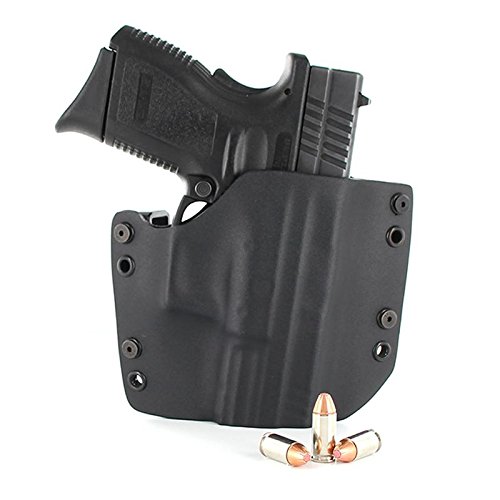
R&R Holsters OWB Holster - Black (Right-Hand, Walther PPS M2)


As an Amazon Associate we earn from qualifying purchases. Product prices and availability are accurate as of the date/time indicated.
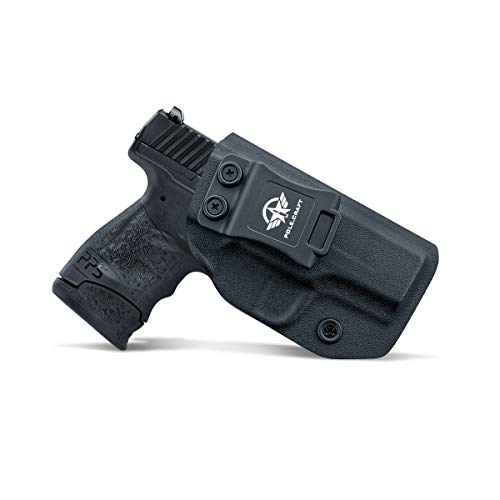
Walther PPS 9mm/40 IWB Kydex Holster - Right Hand, Adjustable Cant (Black)
As an Amazon Associate we earn from qualifying purchases. Product prices and availability are accurate as of the date/time indicated.

Maxx Carry Multi-Carry 4-Way OWB and IWB Leather Gun Holster fits G 43, 43X 9mm | Walther PPS, PPS M2 | Springfield XDS 3.3, Hellcat | S&W M&P 380 Shield EZ | Beretta APX Carry | Taurus PT 709 Slim
As an Amazon Associate we earn from qualifying purchases. Product prices and availability are accurate as of the date/time indicated.
Prices shown are approximate and for reference only. Prices change often, so please check the current price on Amazon before you buy.
Fit availability for the PPS family changes as makers update their lists; every row requires confirming your exact generation, PPS Classic or PPS M2, and any light or optic, on the maker’s current fit list before ordering. Prices are typical US street ranges. Ratings are editorial, weighing exact fit and trigger-guard coverage, retention design and adjustability, ride and belt parish, build quality, and value.
The Six PPS OWB Holsters Reviewed
1. Vedder Kydex Parish: Best Overall for the PPS M2
Vedder’s deep fit list and adjustable Kydex make it the M2’s natural first audition, a close OWB parish with the retention screws the slim pistol’s physics ask for. Confirm the exact variant at ordering as the text directs. For the M2 majority, it is the recommendation defended first.
2. Comp-Tac Parish: Best for the Range
Comp-Tac’s range citizens bring modular mounts and a trainer’s draw geometry to the PPS parish, built for the class and practice life. Their fit parish is version-specific, audited as such. On the range, it closes the argument.
3. Safariland ALS Parish: Best Active Retention, Where Listed
Where Safariland’s current list names your exact PPS, its ALS parish offers the duty citizen’s retention with a trained, instinctive release. Where it does not, no neighboring model substitutes, and this guide’s conditional is absolute. In its listed parish, it stands alone.
4. DeSantis Leather Parish: Best Pancake
DeSantis’s leather pancake pulls the little pistol close in the traditional parish, quiet, comfortable, and kind to a coat’s lining. Leather’s retention is audited as it ages, as the text directs. In the leather parish, it earns its row.
5. Blade-Tech Parish: Best Convertible
Blade-Tech’s convertible citizens serve the owner whose PPS moves between range OWB and other parishes on one shell. Their fit list is the audit’s first stop. In the flexible parish, they stand.
6. Value Polymer Parish: The Audited Budget
The budget citizens close the table with their doctrine stated plainly: exact generation fit verified, trigger coverage audited by eye, retention tested on the unloaded pistol, or the purchase does not proceed at any price. As the entry, audited so, they earn a modest place.
Buying Guide: How to Choose an OWB Holster for a Walther PPS
Step One: Take the Variant Census to the Fit List
Write the pistol’s identity in full, generation by its release, PPS Classic’s paddle or PPS M2’s button, its light by exact model or its absence, its optic or its absence, your hand, and your belt’s width, and carry that census to each maker’s current fit list, requiring the exact line for your configuration and accepting no photograph, no neighboring model, and no universal parish in its place. Where a maker’s list is silent or ambiguous on your generation, ask their support in writing before ordering, since the answer is part of the purchase. Set the budget against the system in the same step, holster, the gun belt its ride depends on, and a second magazine carrier in the parish if the pistol’s single-stack capacity makes the spare a serious citizen in your carry doctrine, as for most PPS owners it honestly is.
Step Two: Audit Fit, Coverage, and Retention on the Unloaded Pistol
On arrival, with the pistol verified unloaded, magazine removed and chamber checked visually and physically, or with an inert trainer of the exact model, audit in the standing order: the pistol seats fully with the holster’s engagement as designed; the trigger guard is covered completely and rigidly, inspected by eye from every parish; retention holds the inverted shake test over a bed and releases to a clean draw from the belt; retention screws, where fitted, are set to your balance and their parish secured as the maker directs. Mount the holster on the gun belt you will actually wear and grade the ride through a day’s parish, sitting, driving, bending, the little pistol’s butt audited against your garments in the mirror. Reject on a coverage gap, a fit that requires force, or retention that cannot be adjusted into the honest parish, and return it inside its window, because a PPS holster’s failures are not broken in. They are bought out or they are kept, and only one of those is a doctrine.
Step Three: Train the Draw and Keep the Parish Honest
Train the draw dry, with the verified unloaded pistol or the trainer, in the garments of the carry parish, until the little grip is found without looking and the reholster is a slow, deliberate, looked-at act, the parish where most holster accidents in every article on this site are scheduled and where slowness is the entire vaccine. For an active-retention citizen, the release is trained as part of the same draw until it is one motion, and any day it fumbles in practice is a day the holster’s parish is reconsidered before it is carried. Maintain the system seasonally, Kydex screws checked, leather’s retention audited as the parish softens, the belt’s stiffness graded, and the pistol’s own configuration, a light added, an optic fitted, treated as a new census and a new holster question, never as a modification to be forced into the old mold. Store the pistol at home by the standing rules, in its safe, unloaded, separate from ammunition. Kept so, the OWB parish becomes what it promises for the PPS, a fast, close, honest carry for a pistol built to be carried, which is the whole doctrine of the best OWB holster for Walther PPS and the reason the right one is chosen by its fit list, its coverage, and its retention, and never by its photograph.
Frequently Asked Questions About Walther PPS OWB Holsters
Will a PPS M2 holster fit the original PPS?
No, and the reverse is equally true, because the two generations differ in the very parishes a molded holster holds: frame and trigger guard profile, slide shaping, and the release’s architecture, the Classic’s paddle in the guard’s parish against the M2’s frame button. A molded Kydex or leather holster is a negative of one pistol’s exact shape, and the other generation in it will sit wrong in ways that matter, retention that holds the wrong parish or barely holds, a trigger guard’s coverage that no longer matches the guard it was drawn around, a draw that binds or a seat that never fully arrives. The soft universal parish can physically swallow either, which is not the same as fitting, since its retention and coverage are generic by design and this guide does not sign them for primary carry. The discipline is the census of Step One, generation identified by the release in one glance, and the fit list’s exact line required before money moves. Owners of both generations, a common parish in this family, need both holsters, and the small expense is the price of two pistols that share a name and almost nothing a holster cares about.
Is OWB carry practical for a small pistol like the PPS?
Yes, in the parishes this article names, and its practicality follows from the pistol’s own slimness: OWB’s standing costs are exposure and concealment, and a single-stack subcompact in a close pancake under a real cover garment, a winter coat, an untucked overshirt in its season, conceals as well as many larger pistols do inside the waistband, while paying OWB’s dividends in comfort across a long day and in a draw unimpeded by the waistband’s parish. Its impracticality is equally specific: under light summer clothing the OWB parish prints and rides exposed in ways IWB was invented to answer, and the PPS owner whose carry is a summer parish will find this site’s IWB guidance the honest citizen for it. Open carry, where lawful and chosen, is the PPS OWB’s most exposed parish and the one where this guide’s retention counsel, an active citizen considered seriously, and the owner’s attention to the pistol’s security in crowds, applies with the least dilution. The verdict is seasonal and doctrinal rather than absolute, which is why so many PPS owners own both parishes and let the coat decide, a settlement this guide regards as the family’s wisdom rather than its indecision.
Do I need a special holster if my PPS M2 has a red dot or a light?
Yes, in both cases, and the two modifications change the holster in different parishes. An optic rides above the slide where a standard holster’s top parish runs, so the holster must be cut for it, the optic cut named in the fit list for your configuration, and a standard holster cannot be made to accept it by force or by home cutting without compromising the shell’s structure and the maker’s parish. A light changes the mold’s whole lower parish, since the light-bearing holster retains on the light’s body, which is commonly wider than the slim slide it serves, and it therefore fits only the exact light it names, with the pistol’s generation census unchanged and joined by the light’s own census line. Both modifications also change the carry’s other citizens, the belt’s parish under a slightly larger rig, the garment’s arithmetic, and the training parish, the optic’s draw and the light’s handling each a skill to be built dry on the unloaded pistol. The rule that governs all of it is this article’s first: the configuration you carry is the configuration the fit list must name, in full, and a change to the pistol is a change to the holster question, asked again from the census.
What belt should I use with a PPS OWB holster?
A proper gun belt, and the little pistol’s lightness is the trap this question exists to disarm: because the PPS weighs so little, its owners are tempted to carry it on a dress or fashion belt and then to grade the holster for the sins of its foundation, the ride that sags a degree at a time, the draw that pulls the holster’s parish up with the pistol, the cant that wanders across the day. A gun belt of the standard parish, stiffened, in leather or in the reinforced nylon citizens, sized to the holster’s slots or clips as the census recorded, holds the little rig exactly where the morning put it, which is the whole of its commission and the reason it is in Step One’s budget. Width follows the holster’s parish, the common inch-and-a-half settlement serving nearly every citizen in this table. The belt is also the audit’s control variable: every fit and retention test in this guide is performed on the belt of the carry, since a holster graded on a foundation it will never meet has not been graded at all. Buy the belt once, with the holster, and the PPS’s OWB parish stands on the same ground as the duty pistol’s, which is the only ground this site signs.
Related guides
- Handgun Safe in 2026: Handgun Safe for Quick Access, Safe Storage, and Simple Home Protection
- Biometric Safe in 2026: How to Choose a Fingerprint Safe for a Handgun That Opens Reliably and Stores It Securely
- Lock&Lock LHC8034 in 2026: 6 Best LocknLock LHC8034 Containers for Lunch, Meal Prep, and Fresh Food Storage
- Lock&Lock 500ml in 2026: 6 Best LocknLock 500ml Containers for Lunch, Snacks, and Meal Prep
More from Amazon
Programs that pair well with the guide above. Offers and eligibility are set by Amazon and may change.
Free shipping on eligible items, Prime Video and more. Eligible new members can start with a free trial.
Start a Prime free trialAudiobooks and podcasts to listen to on the go. Eligible new members can start with a free trial.
Try Audible freeAd-free music streaming. Eligible new subscribers can start with a free trial.
Try Music Unlimited freeA free business account with business pricing and bulk-buying tools for work, shop or home office.
Create a business accountAs an Amazon Associate we earn from qualifying purchases.



Write Your Review
No reviews yet. Be the first to share your experience!