
What's inside
- Best Concealed Carry Holster for Left Handed: Positions, Molds, and Availability
- Best Concealed Carry Holster for Left Handed: Quick Comparison
- The Six Left-Hand Holsters Reviewed
- Buying Guide: How a Left-Handed Shooter Should Choose and Rehearse a Concealed Holster
- Frequently Asked Questions About Left-Handed Concealed Carry Holsters
As an Amazon Associate I earn from qualifying purchases. This post may contain affiliate links at no extra cost to you.
The best concealed carry holster for left handed shooters begins with a refusal: the left-handed carrier should never again accept the right-handed world’s leftovers, the universal nylon pouch that fits no one, the ambidextrous compromise whose clip swaps sides and whose molding serves neither, or the well-meant advice to simply learn to draw right-handed, as though a defensive skill should be built on the hand the body does not trust. Ten percent of shooters draw with the left, and the modern holster market, Kydex above all, serves them properly when they know how to shop it: true left-hand molds, cut and formed for a left-side draw with the sweat guard, cant, and clip placement designed rather than mirrored as an afterthought. This guide grades six real, currently sold holsters available in genuine left-hand configurations, appendix and strong-side, Kydex and hybrid and leather, on the criteria the southpaw actually lives with: availability in left-hand without a custom wait, retention molded to the exact pistol with the trigger covered completely, and the draw geometry of the left side, which crosses the body’s own furniture, seatbelts, cover garments, and the world’s right-handed arrangements, differently. It runs inside this site’s frame throughout: carry only where lawful for you under your permit or your state’s framework; fit-test and rehearse only with the pistol verified unloaded, magazine removed and chamber checked visually and physically; and store the pistol locked, separate from ammunition, whenever it is not carried.
Understand the left-handed carrier’s specific map before the table, because it is not a mirror image, it is a different country. The left strong-side hip sits where the car’s center console and the seatbelt’s buckle live for the driver of an ordinary left-hand-drive vehicle, which makes the seated draw a rehearsed skill rather than an assumed one, and argues, for many left-handed drivers, for the appendix position whose draw survives the seated posture best. The left appendix draw clears the cover garment with the right hand, a reversal the right-handed world’s tutorials never mention, and its reholster demands the same muzzle discipline with the body’s geometry mirrored, which the steps will teach as its own liturgy rather than as a footnote. Magazine carriers, light switches, and the pistol’s own controls join the map: the left-handed carrier of a pistol with right-handed-only controls has made peace with the index-finger magazine release and the slingshot slide, and the holster that accommodates a weapon light or an optic must be ordered in left-hand with those fitments recited, since the left-hand light-bearing mold is the catalog’s rarest citizen and its lead times deserve planning rather than discovery.
Our Top Picks
Best Concealed Carry Holster for Left Handed: Positions, Molds, and Availability
True Left-Hand vs Ambidextrous vs Reversible: Reading the Listings Honestly
The listings divide into three honest classes and the southpaw must learn their faces. The true left-hand holster is molded for the left draw from its own form, its sweat guard rising on the body’s side, its cant set for the left hand’s stroke, its hardware placed for a left belt line, and it is the only class this guide recommends for a primary carry rig. The reversible holster, whose clip or paddle swaps sides on a symmetrical shell, serves acceptably in the better Kydex examples and poorly in the soft ones, its compromise being a guard and a ride that fit both sides moderately and neither side excellently, acceptable for a backup or a borrowed role. The universal holster, one size, soft material, a strap for retention and a prayer for the trigger, is refused by this guide for any hand, on the grounds its other articles have established: a trigger guard draped rather than covered, in material that can fold into it, is not a holster but a hazard with a belt clip. When ordering, the left-handed buyer recites the whole fitment as a checklist, pistol model and generation, left hand stated twice, light and optic by model, belt width, since the left-hand SKU is the one most often mis-picked in a warehouse of right-hand abundance, and the box’s arrival should be audited against the recitation before the pistol ever meets it, unloaded, as the steps command.
Appendix vs Strong Side for the Left-Handed Body
The left appendix position, inside the waistband at the front-left of the belt, has become the southpaw’s growth parish for sound reasons: the draw is fast from standing and the most survivable from the driver’s seat, the pistol lives in the body’s own view for retention awareness, and the concealment, with a proper wing or claw pressing the grip into the body and a wedge tuning the muzzle’s angle, serves the left build as faithfully as the right. Its disciplines are its own: the reholster performed slowly, the muzzle never covering the carrier as the garment is cleared with the right hand and the pistol seated with the left, a sequence rehearsed unloaded to the point of boredom, and the holster’s rigid Kydex, full trigger coverage, and a ride that keeps the grip indexed identically every time being non-negotiable specifications rather than preferences. The left strong-side hip, at the eight-to-nine-o’clock of the left-handed clock, remains the comfort and tradition choice, its draw the one the body’s shoulder knows best, its concealment asking the forward cant and the cover garment’s drape, and its seated access in the car being the rehearsed exception its carriers must honestly train. Neither position wins the article; the carrier’s day, vehicle, and build elect one, and the table grades the best citizens of both parishes in true left-hand.
The Pistol’s Controls and the Left-Handed System
The holster is one citizen of a left-handed system whose other citizens deserve their paragraph. The magazine carrier rides, for the left-handed draw, on the right side, the support hand being the right, and its left-system placement should be ordered in the same cart as the holster, since a southpaw’s reload geometry is as specific as the draw’s. The pistol itself argues for the ambidextrous and reversible controls the modern fleet increasingly offers, magazine releases swappable to the left thumb’s command, slide stops on both sides in the better designs, and the left-handed buyer choosing a carry pistol should weigh those controls as heavily as the holster’s availability, the two purchases being one system specified together. Training closes the system: the left-handed carrier should seek instruction from a teacher who can demonstrate the left draw rather than describe its mirror, rehearse the vehicle’s seated draw and the cover garment’s right-handed clear as named skills, and dry-practice with the verified-unloaded pistol or a trainer until the left hand’s stroke is as unremarkable to the body as the right hand’s signature. The holster bought by this guide’s rules is the equipment half of that system; the rehearsal is the half that cannot be shipped.
Best Concealed Carry Holster for Left Handed: Quick Comparison
| Left-Hand Concealed Holster Model | Key Specs | Best For | Typical Price Range | Rating |
|---|---|---|---|---|
| Vedder LightTuck (Left Hand) | Kydex IWB in class, adjustable cant and ride positioning in line, true left-hand SKUs | Best concealed carry holster for left handed overall | $65 – $85 | 4.6 / 5 |
| Tier 1 Concealed Axis / Agis class (Left Hand) | Appendix rig in class, integrated mag carrier positioning in line, left-hand builds | Best left-hand appendix rig | $120 – $160 by configuration | 4.6 / 5 |
| Alien Gear ShapeShift / Cloak (Left Hand) | Modular system in class, left-hand shells in line, multiple carry modes | Best modular left-hand system | $80 – $130 by kit | 4.3 / 5 |
| CrossBreed SuperTuck (Left Hand) | Leather-Kydex hybrid in class, left-hand builds in line, strong-side comfort | Best left-hand hybrid comfort | $75 – $100 | 4.4 / 5 |
| Tulster OATH / Profile class (Left Hand) | Minimalist Kydex in class, left-hand options in line, optic-ready cuts positioning | Best minimalist left-hand | $70 – $95 by model | 4.4 / 5 |
| Blackhawk / Safariland left-hand duty-derived class | Left-hand SKUs in established lines in class, OWB and IWB by model | Best institutional left-hand availability | $50 – $90 by model | 4.2 / 5 |
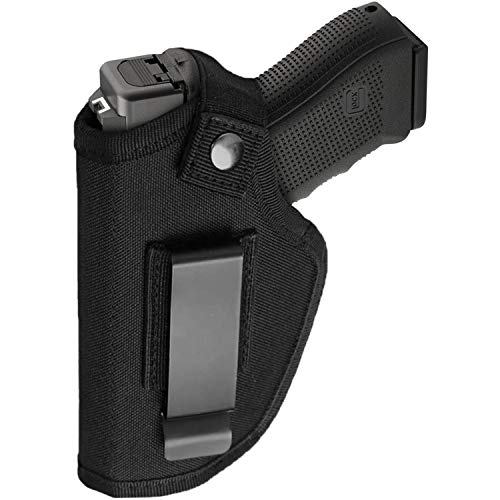
Gun Holsters for Men/Women, 380 Holster for Pistol Holster, Universal Airsoft Right/Left, IWB/OWB 9mm Holsters for Concealed Carry, Fits Glock, M&P Shield & Similar Handgun
As an Amazon Associate we earn from qualifying purchases. Product prices and availability are accurate as of the date/time indicated.

Universal Shoulder Holster for Men, Adjustable Chest Holster Left Hand | Breathable Lightweight Design with Secure Fit, Comfortable All-Day Carry, Fits Most Compact, Subcompact & Full Size Pistols


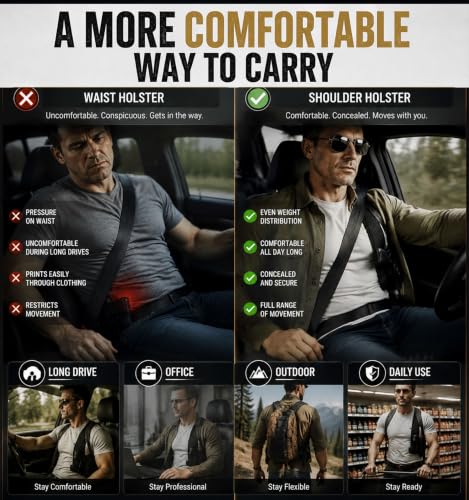


As an Amazon Associate we earn from qualifying purchases. Product prices and availability are accurate as of the date/time indicated.

IWB Leather Holster for Inside Waistband Concealed Carry Fits:S&W M&P Shield-Glock19 26 29 30 32 43-Beretta Px4-RUGER EC9s-SIG-HK-Taurus-XDS or Similar Sized Handguns


As an Amazon Associate we earn from qualifying purchases. Product prices and availability are accurate as of the date/time indicated.
Prices shown are approximate and for reference only. Prices change often, so please check the current price on Amazon before you buy.
Confirm left-hand configuration, pistol generation, and light/optic fitment at order. Ratings are editorial, weighing true left-hand design, retention and trigger coverage, concealment geometry, availability without custom delay, and value.
The Six Left-Hand Holsters Reviewed
1. Vedder LightTuck Left Hand: Best Overall
The LightTuck leads the southpaw table because it treats the left hand as a stocking citizen rather than a special order: a precision Kydex shell in genuine left-hand, adjustable in cant and ride height across the range a left belt line argues about, with a steel clip that holds the belt and a sweat guard cut for the left body’s side. It serves appendix and strong-side from one design, its fitment list covers the carry fleet including the light-bearing recitations, and its price is the class’s honest center. For the left-handed carrier buying one holster to learn their position with, it is the recommendation defended first, a rig whose leftness is engineered rather than improvised, which is the entire thesis of this article in one product.
2. Tier 1 Concealed Appendix Rigs: Best Left-Hand Appendix
Tier 1’s appendix systems serve the left-handed front carry with the parish’s full architecture: the holster and magazine carrier joined in a rig whose claw, wedge compatibility, and ride tuning are offered in true left-hand builds, so the southpaw’s appendix is the same instrument the right-handed world’s flagship reviews describe, not a translation of it. Its lead times and price are the custom class’s, planned rather than discovered, and its constituency, the committed appendix carrier, regards both as the cost of the position done completely. For the left-handed driver whose seated draw decided the position, it is the first row of its parish, and its rating reflects a rig that makes the left appendix a first-class carry rather than a workaround.
3. CrossBreed SuperTuck Left Hand: Best Hybrid Comfort
The SuperTuck’s leather-backed hybrid remains the strong-side comfort standard, and its left-hand builds are a long-standing line rather than a favor: the leather spreads the rig’s pressure across the left hip’s whole afternoon, the Kydex shell keeps the trigger’s coverage and the draw’s consistency, and the system’s manners suit the carrier whose day is long and whose position is traditional. Its size is the hybrid’s known tax, its leather asks the care and the retirement discipline of its material, and for the left-handed carrier whose priority is forgetting the pistol is there until it is needed, it is the comfort row with a generation of southpaw service behind it.
4. Tulster Left-Hand Class: Best Minimalist
Tulster’s minimalist Kydex serves the left-handed carrier who wants the least holster that still does the whole job: a trim shell, modern cuts for the optic-equipped carry pistol, retention with the audible seat the parish prizes, in left-hand configurations across the popular fleet. Its minimalism is its philosophy and its limit in one, fewer adjustments than the leaders, a ride that suits the builds it suits, and for the southpaw whose pistol is a slim single-stack and whose cover is light, it is the considered row, the holster as a whisper rather than a system, graded highly within its intention.
5. Alien Gear Modular Left Hand: Best System for the Undecided
Alien Gear’s modular shells serve the left-handed carrier whose position is still an open question: one shell, mounts for inside and outside the waistband in left-hand configuration, the season’s experiments conducted within a single purchase. Its compromises are modularity’s own, a bulk and a complexity the dedicated rigs avoid, and its left-hand availability across the fleet is genuinely broad. For the new southpaw carrier, whose appendix-versus-hip question the guide’s rehearsal has not yet answered, it is the tuition-efficient row, a system bought to learn with and, for many, kept long after the learning, since a holster that does three jobs adequately has its own permanent constituency.
6. Institutional Left-Hand Lines: Best Availability
The great houses, Safariland and Blackhawk in their classes, close the table with the virtue of sheer availability: left-hand SKUs across the duty-derived and concealment lines, stocked by the retailers of every region, in fitments for the fleet’s working pistols, so the southpaw whose need is this week rather than this quarter is served without a custom queue. Their concealment refinements trail the specialists’, their prices and their provenance are the institutions’, and for the left-handed officer’s off-duty rig and the carrier whose local shop is the supply chain, they are the dependable floor, the proof that the left-handed market, at its base, is stocked, which was not true a generation ago and is worth one row’s celebration in every southpaw guide.
Buying Guide: How a Left-Handed Shooter Should Choose and Rehearse a Concealed Holster
Step One: Recite the Fitment and Elect the Position by Your Day
Write the fitment as this site’s holster guides always command, pistol model and generation, left hand, light and optic by exact model, belt width, and let no product enter the cart that does not match the whole recitation, with the left-hand designation checked twice, since it is the field most often defaulted by a website’s memory of your right-handed browsing. Elect the position by the day’s honest description: the driver and the desk worker, whose seated hours dominate, audition appendix first; the carrier whose build, wardrobe, and tradition favor the hip takes the strong side with its cant and its garment discipline; and the undecided buy the modular row or the adjustable leader and let the rehearsal of the next step vote with the body, which is the only electorate whose result matters. Add the gun belt to the same decision if one is not owned, stiffened and in the holster’s clip width, since the left hip sags under exactly the same physics as the right.
Step Two: Fit-Test and Rehearse Unloaded Until the Left Draw Is Boring
With the pistol verified unloaded, magazine removed and chamber checked visually and physically, no ammunition in the room, perform the audit in its order: the holstered pistol’s trigger covered completely, the retention’s click or hold positive, the inverted shake over a bed passed; the ride in the mirror, grip indexed where the left hand falls, the cover garment’s clear rehearsed with the right hand until the two hands’ cooperation is a single motion; the draw and the reholster, slow, then honest, fifty repetitions across the garments of the week’s wardrobe, including the seated draw in the parked car, the pistol’s path never crossing the body, the reholster performed with the eyes and the patience the appendix position’s safety is made of. Note the system’s failures in the rehearsal’s ink, the clip that walks, the cant that prints, the garment that snags, and correct them at the bench, since every failure found here is one the street will not be asked to grade, which is the entire economy of dry practice stated once more for the hand that needs it most.
Step Three: Carry Lawfully, Store Locked, and Maintain the Rig
Run the carry inside your law’s whole text, your permit’s or your state’s framework for where and how the left-handed pistol may ride, the prohibited places honored without the morning’s negotiation, and the vehicle’s transfers performed by this site’s vehicle discipline, the pistol into its lock box or its console safe at the stops where carry ends, never loose in the door’s pocket as a way of life. At home the pistol sleeps locked and separate from ammunition, the holster beside it, and the rig is maintained on the month’s round: screws and clip tension checked, Kydex read for the fold’s first crack, leather for the softening that retires it, retention re-verified by the shake, since a holster is a safety device with a service life on whichever hip it serves. Kept so, the left-handed carrier carries with the same unremarkable competence the right-handed world takes for granted, which was never a favor to be granted but a standard to be stocked, rehearsed, and met, and the southpaw who builds the system by these steps will find, as their left hand could have told the industry all along, that the draw was never the problem, only the catalog was.
Frequently Asked Questions About Left-Handed Concealed Carry Holsters
Can I just use a right-handed holster on my left side?
No, and the reasons are mechanical rather than tribal: a right-hand holster worn on the left presents the pistol’s grip in the wrong orientation for the left hand’s draw, its retention and cant engineered for a stroke your hand cannot perform, its sweat guard against the wrong side, and its draw, attempted in earnest, becomes a cross-body fishing expedition with the muzzle touring the carrier’s own geography, which is the precise definition of an unsafe draw. The apparent exceptions dissolve on inspection: the small-of-back and cross-draw designs that seem to translate are their own positions with their own disciplines, not right-hand holsters borrowed; and the ambidextrous soft pouches that claim both sides serve neither safely, on the trigger grounds this guide has stated. Buy the true left-hand mold, which the modern market stocks across the fleet at the same prices as the right, and let the right-handed holster’s only role in a southpaw’s life be the one it was built for, somebody else’s hip.
Is appendix or strong-side better for left-handed carriers?
The same honest division as for the right, with the left’s own evidence added: appendix gives the fastest standing draw and, decisively for many southpaws, the most workable seated draw in the driver’s seat, where the left hip’s rig is pinned between the body and the door and crossed by the seatbelt’s architecture; strong side gives the traditional comfort, the shoulder’s most natural stroke, and a concealment that the right cover garment makes complete, at the price of that seated access, which its carriers must rehearse as a named skill rather than assume. Build, wardrobe, and the day’s seated hours elect between them, and the guide’s rehearsal, both positions tried unloaded across a week of real garments and real chairs, is the only poll whose result should be trusted, since the position question, for either hand, is answered by bodies and not by articles, this one cheerfully included.
Are left-handed holsters harder to find or more expensive?
Less than at any time in the market’s history, and the remaining gaps are specific enough to plan around: the major Kydex and hybrid houses stock true left-hand across the popular carry fleet at the same prices as the right, commonly built to order in the same lead time; the gaps live at the catalog’s edges, the left-hand light-bearing mold for the less common pistol-and-light pairings, the newest pistol’s left fitment arriving a season after its right, and the deep-discount shelf where right-hand overstock is dumped and left-hand never appears. The southpaw’s countermeasures are the guide’s own: order the left rig from the makers who stock it as a line rather than as a favor, plan the exotic fitment’s lead time into the pistol’s purchase, and refuse the false economy of the wrong-hand bargain, since a holster’s price is paid once and its geometry is paid daily. The direction of the market is the southpaw’s ally, every year adding fitments, and the carrier who buys by this guide’s recitation will find the modern catalog, if not yet a mirror of the right’s abundance, a stocked and honest shop.
What about left-handed magazine carriers and accessories?
Build the whole belt as a left system in one order, since the accessories have geometries as specific as the holster’s: the magazine carrier rides on the right side for the left-handed shooter, the right hand being the support hand that feeds the reload, in a carrier whose orientation, bullets-forward or backward by your school’s teaching, is set for the right hand’s index; the appendix rigs of the table integrate this placement by design, which is part of their southpaw appeal. The flashlight, the tourniquet, and the rest of the modern belt follow the same mirror logic, placed for the hand that will actually use them, and the pistol’s own controls deserve the audit of the guide’s system section, the reversible magazine release swapped to the left thumb where the pistol allows, an ambidextrous slide stop weighed at the pistol’s purchase. The principle is the article’s thesis at belt scale: the left-handed carrier’s equipment is a system designed around the left hand’s work, not a right-handed system worn in translation, and the shooter who builds it so will reload, draw, and administer it all with the fluency that the other ten percent of the range quietly envies.
Related guides
- Best Thigh Holster in 2026: How to Pick a Thigh Holster That Is Secure, Comfortable, and Fits Your Pistol Perfectly
- Biometric Lock Reliability for Daily Use in 2026: Biometric Lock Reliability for Daily Use
- Best LCP Ankle Holster in 2026: 6 Comfortable Ankle Holsters for the Ruger LCP
- Best Holster for Walther CCP M2 in 2026: 6 Concealed Carry Holsters for Comfort and Safety
More from Amazon
Programs that pair well with the guide above. Offers and eligibility are set by Amazon and may change.
Free shipping on eligible items, Prime Video and more. Eligible new members can start with a free trial.
Start a Prime free trialAudiobooks and podcasts to listen to on the go. Eligible new members can start with a free trial.
Try Audible freeAd-free music streaming. Eligible new subscribers can start with a free trial.
Try Music Unlimited freeA free business account with business pricing and bulk-buying tools for work, shop or home office.
Create a business accountAs an Amazon Associate we earn from qualifying purchases.



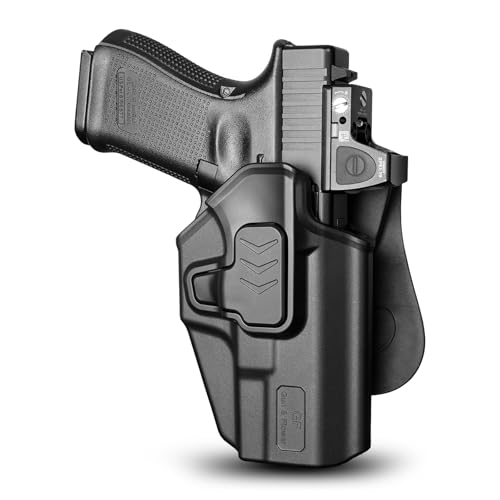

Write Your Review
No reviews yet. Be the first to share your experience!