
What's inside
As an Amazon Associate I earn from qualifying purchases. This post may contain affiliate links at no extra cost to you.
The best holster for tactical training use is graded by a harder examination than the range holster’s, because training is where the repetitions live: the draw and the reholster performed hundreds of times across a course’s days, under an instructor’s eye, in movement, from positions the square range never composes — and where the holster’s failures are therefore not inconveniences but the curriculum’s interruptions and, in the reholster’s case, the safety record’s entries. This guide grades the real, currently sold training holsters on the course’s own papers, inside the safety frame that governs every word on this site: training is conducted under qualified instruction and the hosting range’s rules, which outrank any article; the firearm is verified unloaded for the dry portions of any course and the live portions run exactly as the instructor’s programme prescribes, with the muzzle’s discipline and the trigger finger’s indexed parish maintained through every repetition; and the holster’s first specification, before retention levels and ride heights, is the one this guide never trades away — the trigger guard covered entire, the mouth held open by the holster’s own structure so the reholster is a placement rather than a forcing, and nothing — no strap, no garment, no cord — invited into the trigger’s parish at any point of the cycle. The retention doctrine is the article’s centre: training asks for retention that survives the course’s movement — the ground work, the partner drills, the vehicle’s parish where the syllabus goes there — and releases as one motion inside the draw itself, the active citizens (the thumb’s release married to the grip) graded above the friction’s parish for the tactical syllabus, with the levels’ dialect (the industry’s retention levels) read as the course’s requirement rather than the catalogue’s poetry.
The reholster doctrine deserves its founding paragraphs, because it is the training holster’s defining examination and the one the marketing never photographs. The draw is the syllabus’s glamour; the reholster is its statistics — performed as often, under fatigue, at the course’s end when the instructor says make safe and show clear, with the student’s attention already on the debrief. The doctrine’s requirements are mechanical and absolute: the holster’s mouth must hold its shape empty, by the shell’s rigidity or the design’s structure, so the muzzle finds an opening rather than a collapsed parish that the other hand must hold — the two-handed reholster being the muzzle’s discipline spent at the worst moment; the path in must be as unobstructed as the path out, with no retention citizen to be defeated by a garment’s fold at the entrance; and the student’s liturgy — the look, the slow placement, the finger indexed and the muzzle’s direction composed — is the instructor’s to teach and the holster’s to permit. The second doctrine is the release’s marriage to the grip: the active retention that opens under the thumb as the hand takes its firing grip composes one motion, where the release that asks a separate act — the finger’s press toward the trigger’s parish being the design this site grades down on principle, the SERPA debate’s lesson absorbed into the parish’s law — spends the draw’s first fraction re-teaching the hand. The third doctrine is the course’s ecosystem: the holster married to the belt’s and the mount’s citizens — the drop and offset parish, the quick-detach systems that move the holster between the belt and the carrier — since the tactical syllabus wears its gear as a system and the holster that cannot join it is a range citizen at a course it cannot attend.
The student census completes the frame: the professional parish — the officer and the service member whose course is a qualification and whose holster is the duty’s own, graded on the agency’s list where one binds; the civilian student of the tactical syllabus, whose course fees deserve a holster that will not be the day’s lesson in equipment failure; the competitor crossing into the tactical parish, whose race holster’s parish is another article’s and whose open, trigger-exposed citizens have no place in this one — a boundary the guide states plainly, since the training field’s first equipment check exists to enforce it; and the instructor, whose holster is demonstrated a thousand times and whose choices teach louder than their words. The table spans the census across the active-retention and duty classes, and the reviews name each holster’s course as plainly as its price.
Our Top Picks
What Makes the Best Holster for Tactical Training Use
Retention: Active, Married to the Grip, Proven in Movement
Grade the retention by the syllabus’s tests: the device — the hood, the thumb’s release, the automatic locking parish — holding the pistol through the course’s movement, the jumps and the ground and the partner’s attentions where the curriculum includes them, tested at the audition by the shake and the inversion the shop allows and at the course by its first hour’s evidence. The release is graded as the draw’s first act: one motion inside the grip’s taking, the thumb’s parish, learnable to the reflex the course’s repetitions will build — since the holster’s release is not a feature but a motor programme the student is purchasing, and its retraining cost between systems is a real figure the buying guide counts. The passive citizens are graded in their place: the friction’s parish serves the range’s and the concealed syllabus, and the tactical course’s movement elects the active, as the doctrine has argued from its head.
The Reholster: Mouth, Path, and the One-Hand Rule
The mouth’s rigidity is inspected as a safety specification: the shell that holds its opening against the belt’s pressure and the body’s, empty, at the course’s hundredth repetition as at its first — the Kydex and polymer citizens’ founding virtue, and the soft parish’s disqualification from this syllabus entire, stated once and without appeal. The path’s audit follows: the sights’ channel, the light’s parish where the course wears one — the weapon-light citizens being separate fitments, as this site’s standing doctrine insists, the light-bearing model’s holster a different mould from its bare sibling’s — and the garment’s management, the student’s own liturgy, which the holster can only permit and the instructor must teach. The one-hand rule closes the section: the holster that requires the support hand at its mouth has failed the examination, whatever its retention’s medals.
The System: Belt, Mount, and the Course’s Ecosystem
The holster is bought into a system and graded within it: the mount’s parish — the belt’s slide, the paddle’s convenience, the drop-and-offset that clears the armour’s and the belt kit’s geography, the quick-detach citizens (the QLS parish and its relations) that move the holster between the belt, the carrier, and the vehicle’s mount as the syllabus’s day requires; the belt itself, whose stiffness is the holster’s foundation and whose parish is graded in this site’s belt guides; and the cant’s and ride’s adjustability, by which the holster is composed to the student’s body and the course’s positions. The ecosystem’s coherence — one mount’s dialect across the student’s gear — is a specification the professional parish buys deliberately and the civilian student is counselled to imitate, since the course’s morning is no place to discover that the new holster speaks another mount’s language.
Quick Comparison: Holsters for Tactical Training Compared
| Holster | Retention / Best For | Key Specs | Typical Price Range | Rating |
|---|---|---|---|---|
| Safariland 6354 / 6390 ALS class | ALS — best holster for tactical training use overall | Automatic locking, hood options, QLS classes as published | $120 – $190 | 4.8 / 5 |
| BLACKHAWK T-Series class | Thumb release — best duty alternative | L2/L3 classes as published | $110 – $170 | 4.5 / 5 |
| Alien Gear Rapid Force class | Multi-level — best adjustable retention | Level 2/3 configurations as published | $120 – $180 | 4.4 / 5 |
| T.REX Arms Ragnarok class | Friction — best for light-bearing training | Kydex, light models classes as published | $80 – $120 | 4.3 / 5 |
| DARA duty class | Level 2 — best custom fitments | Made-to-order duty classes as published | $110 – $160 | 4.3 / 5 |
| Blade-Tech Signature / duty class | Friction/level 2 — best value | OWB classes as published | $50 – $90 | 4.2 / 5 |
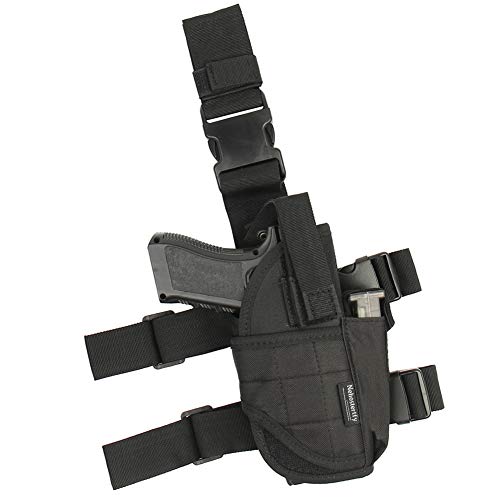
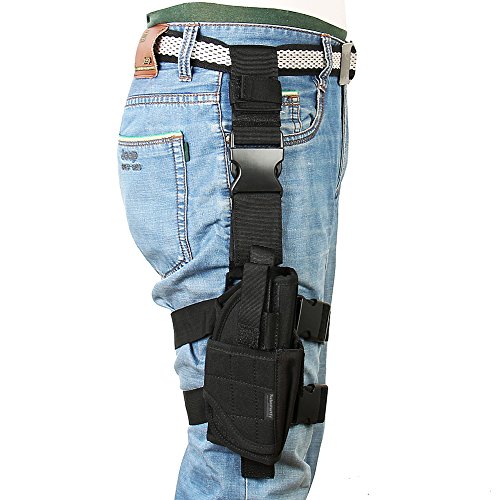
Nehostertfy Drop Leg Holster Tactical Thigh Holster for Pistols Right Hand | Adjustable Black


As an Amazon Associate we earn from qualifying purchases. Product prices and availability are accurate as of the date/time indicated.

WOLF TACTICAL Drop Leg Holster for 9mm Thigh for Men Leg Holster for Pistols Drop Leg Strap Airsoft Holster
As an Amazon Associate we earn from qualifying purchases. Product prices and availability are accurate as of the date/time indicated.

Tactical Schnauzer Concealed Carry Gun Belt for Men & Women | Use Your Own IWB Holster, Secure Retention, Safe Trigger Guard Protection


As an Amazon Associate we earn from qualifying purchases. Product prices and availability are accurate as of the date/time indicated.
Ratings are editorial assessments for structured training use, based on the makers’ published retention systems, mount compatibility, and fitment lists, and value at typical prices. Confirm your exact pistol and light combination against the maker’s fitment list. Prices are typical retail ranges.
The Six Training Holsters Reviewed
1. Safariland ALS — Best Overall
The ALS parish earns the crown as the training world’s reference: the automatic lock that engages on the reholster’s placement — the student’s closing liturgy made mechanical — and releases under the thumb inside the grip’s taking, across the widest fitment census in the table and the QLS ecosystem the professional parish speaks. Its hood citizens compose the higher levels where the syllabus asks. For the tactical course, it is the recommendation this guide writes first, as the instructors’ own belts have written it for years.
2. BLACKHAWK T-Series — Best Duty Alternative
The T-Series is the thumb-release doctrine composed by the house that learned the parish’s hardest lessons in public: the release placed in the grip’s own motion, the levels’ configurations for the duty census, the build of a service holster entire. Its fitment census is the crown’s rival’s, a step behind; where it covers the student’s pistol, the choice between the leaders is the hand’s preference, honestly graded as such.
3. Alien Gear Rapid Force — Best Adjustable Retention
The Rapid Force serves the student whose syllabus crosses parishes: the retention composed in levels by the owner’s configuration, the release’s marriage to the grip maintained across them, the mount’s ecosystem its own. Its complexity is its dialect, stated in the grade; for the one-holster student of several courses, it is the table’s most adaptable citizen.
4. T.REX Arms Ragnarok — Best Light-Bearing Friction
The Ragnarok is the Kydex parish’s training citizen: the light-bearing fitments composed with the modern syllabus in mind, the mouth’s rigidity exemplary, the friction tuned for the course’s repetitions. Its retention is the passive parish’s — graded, per the doctrine, below the active citizens for the movement’s syllabus, and first in its class for the light-bearing range curriculum that is many students’ actual course.
5. DARA Duty — Best Custom Fitments
DARA’s made-to-order citizens serve the fitment census’s long tail — the pistol and light combinations the great houses’ lists forget — at the duty parish’s retention and build. Their lead times are the custom parish’s tax, stated in the grade; the student whose equipment is orphaned elsewhere finds here the table’s most useful address.
6. Blade-Tech — Best Value
Blade-Tech’s citizens hold the value parish with the essentials composed — the rigid mouth, the honest friction or the level’s option, the mount’s compatibility — at the price that starts the student’s kit without the soft parish’s disqualifications. Their retention is the value class’s dialect, conceded plainly; as the first training holster, replaced by graduation rather than by failure, they are the budget’s rational door.
Buying Guide: The Holster Bought for the Course
Step One: The Syllabus’s Census
Read the course before the catalogue: the hosting programme’s equipment list — whose word on retention levels, lights, and mounts is the purchase’s law and outranks this article entire — the pistol and light combination’s exact names, the belt and mount ecosystem the course’s day composes, and your own parish’s next courses, since the holster bought for one syllabus and useless at the next is the parish’s classic false economy. Elect the retention by the syllabus’s movement (the active citizens where the ground and the partner are in the curriculum), the fitment from the maker’s own list against the exact combination, and the mount in the ecosystem’s dialect, in the same sitting.
Step Two: The Hundred-Repetition Audition
Audition the finalist as the course will, in dry practice under the safety frame’s strictest reading — the pistol verified unloaded, the ammunition absent from the room, the muzzle’s discipline entire, ideally under an instructor’s or an experienced eye: the draw’s release married to the grip across the repetitions, the reholster one-handed and looked-in at the liturgy’s pace, the retention proven by the movement’s simulation the space allows, the mount’s marriage to your belt audited at the fiftieth repetition rather than the fifth, since the audition’s question is not whether the holster works but whether it works tired. The holster that passes the hundred is the course’s citizen; the one whose release the hand still negotiates is returned while the returning is a procedure.
Step Three: The Course’s Liturgies
Hold the disciplines the holster joins: the reholster’s liturgy as the instructor teaches it — the assessment, the finger indexed, the look, the slow placement — performed at the course’s every repetition without the haste that fatigue composes, since the reholster is the parish where the training accident lives and its slowness is its safety entire; the gear check at each morning, the mount’s screws and the retention’s function audited as the system’s liturgy; the storage at home by this site’s standing law — the pistol in its locked safe, the holster its accessory and never its substitute; and the law’s frame over all, the carry and the transport conducted under the jurisdiction’s provisions, the course’s certificate kept with the records. So censused, auditioned, and kept, the holster performs the only service that matters: it vanishes into the repetitions — the draw a motion, the reholster a placement, the student’s whole attention on the instructor’s curriculum — which is what training equipment is for, and why its failures, when they come, are measured in more than money.
How We Selected These Training Holsters
We included only real, named, currently sold holsters whose makers publish retention systems and fitment lists, favouring active-retention duty designs with rigid mouths and established mount ecosystems for structured training. Prices are typical retail ranges. Grades weight reholstering safety and release ergonomics above draw speed.
Frequently Asked Questions About Holsters for Tactical Training
What retention level do I need for a tactical training course?
The course’s own word, first and finally — the hosting programme’s equipment list is the purchase’s law, and the student who arrives outside it has bought a spectator’s ticket at a participant’s price — with the parish’s general doctrine beneath it for the courses that leave the choice open: the active citizens, the Level 2 parish in the industry’s dialect (one active device beyond the friction), compose the tactical syllabus’s standard, because its curriculum includes the movement in which friction alone is a hope rather than a system; the higher levels belong to the duty parish’s grappling census, which the civilian syllabus rarely composes; and the friction’s citizens serve the range curriculum honestly where the syllabus is the square parish’s. The levels’ dialect itself is the paragraph’s caution: the industry’s numbers are a convention without a single standard’s enforcement, one house’s Level 2 being another’s marketing, so the doctrine reads the device rather than the digit — the lock that engages automatically and releases in the grip is the specification, whatever the box calls it.
Why do instructors insist on reholstering slowly?
Because the reholster is where the training accident’s parish is, and its mechanism deserves the student’s full understanding: the draw moves the muzzle from the holster’s safety to the target’s line under the eye’s supervision, while the reholster moves it back, at the drill’s end, with the student’s attention already departing toward the debrief, the score, the water — and the obstructions waiting at the holster’s mouth are the day’s own: the garment’s fold worked loose by the movement, the cord’s end, the retention’s citizen mis-seated, any of which, met by a forcing hand with the finger’s discipline spent, composes the parish’s classic negligent discharge into the leg’s geography. The liturgy answers the mechanism point for point — the pause, the finger indexed and proven, the look into the holster, the placement at the walk’s pace — and its slowness is not caution’s decoration but the procedure’s substance. The holster’s part is the mouth that stays open and the path that stays clear, which is why this guide grades them as safety specifications; the student’s part is the liturgy, which no holster can perform for them, and which the good course drills until it survives fatigue.
Can I use my concealed carry holster for a training course?
Usually not, and the reasons are the syllabus’s rather than the holster’s shame: the course’s repetitions are counted in the hundreds, and the concealed citizen — composed for the invisibility’s parish, inside the waistband, under the garment — makes each repetition a negotiation with the clothing that the curriculum did not schedule, while its mouth, in the soft and minimalist citizens, fails this article’s one-hand rule entire. The deeper reason is the training’s own honesty: the tactical syllabus teaches the fighting parish’s draw, from the open rig the course composes, and the student who fights their wardrobe for two days has purchased the wrong lessons at the right course. The exceptions are the courses whose syllabus is the concealed draw itself — a real parish, taught by its own instructors with their own equipment lists, which govern there as every list governs. Read the list, buy for the syllabus you are attending, and let the concealed citizen keep its own parish, where it is graded by another of this site’s articles on its own considerable merits.
Do I need a weapon light on my training holster setup?
Only where the syllabus composes one — the low-light parish’s courses, whose equipment lists name the light as plainly as the retention — with the fitment’s doctrine attached for the student who elects it: the light-bearing holster is a separate mould from the bare pistol’s, married to the exact light’s name as to the pistol’s, since the light composes the holster’s whole retention parish; so the light is bought first, by its own article’s doctrine, and the holster after it, from the fitment list that names both. The student whose courses are the daylight’s is counselled to the bare citizen and the simpler parish, since the light’s holster without the light is a fitment error and the light without the syllabus is a weight. And the parish’s standing note closes the answer: the light is an identification instrument before it is anything else, its use governed by the same law and doctrine as every other parish of the night — the target identified, the background known — which the course exists to teach and the equipment merely serves.
Related guides
- Best Paddle Holster for Sig P365 in 2026: Paddle Holster for Sig P365
- Best Holster for Riding a Motorcycle in 2026: 7 Best Holsters for Riding a Motorcycle That Stay Secure, Comfortable, and Accessible on a Bike
- Best Leather Concealment Holster in 2026: 7 Best Leather Concealment Holsters That Fit Exactly, Cover the Trigger, and Break In Comfortably
- Best Concealed Carry Holster for Glock in 2026: 6 Top Concealed Carry Holsters for Glock, Glock Holsters, and Easy Use
More from Amazon
Programs that pair well with the guide above. Offers and eligibility are set by Amazon and may change.
Free shipping on eligible items, Prime Video and more. Eligible new members can start with a free trial.
Start a Prime free trialAudiobooks and podcasts to listen to on the go. Eligible new members can start with a free trial.
Try Audible freeAd-free music streaming. Eligible new subscribers can start with a free trial.
Try Music Unlimited freeA free business account with business pricing and bulk-buying tools for work, shop or home office.
Create a business accountAs an Amazon Associate we earn from qualifying purchases.

Write Your Review
No reviews yet. Be the first to share your experience!